The Wilkinson Wellness Lab is excited to partner with the UAB Community Health & Human Services Program and Christian Life Church in support of the Revive Health Fair on Saturday, October 7, 2023. The health fair is located at 2490 Valleydale Road and will take place 9am – 1pm. As a resource for the health fair, the Wilkinson Wellness Lab is providing:
Blood pressure screening,
Body Mass Index reading,
Body Fat percentage reading, and
Skeletal muscle percentage reading
For more resources in support of achieving your overall weight goals, please click on the links below:
Join the conversation on Facebook or in the comments section. Have you lost weight over a process? What did you do lose weight? How long did the weight loss take you? How was your experience? Please share with family and friends.
Heart disease refers to several kinds of illnesses that affect the cardiovascular system. In the United States (U.S.), it is the most common condition responsible for heart attack and high mortality rates. Based on the prevalence rates, the heart disease is the number one killer of women in the U.S. (CDC, 2023). Its occurrence among women is instigated by conditions such as heart attacks, arrhythmia, and heart failure. As such, heart disease leads to low quality of life and high mortality among women.
This topic hits home for me. A month ago, I lost a childhood friend to heart disease. On arriving at the hospital, she was diagnosed with a heart attack. The medical staff induced her into a coma, unfortunately, she did not survive. At her funeral I reflected on how our youth was filled with playing, running, laughing, and hugging my friend. After losing my friend, the situation made me think about my mortality, and what preventative measures I could take.
According to the Mayo Clinic, some steps to reduce your risk include:
Portion Control
Low calorie, nutrient rich foods like fruits, vegetables and fish
Eating whole grains, fruit and vegetables
Selecting whole-wheat bread as opposed to white bread
Limit unhealthy fats
Chose olive oil instead of butter
Choose low-fat protein
Skim milk, fish or beans are all good choices
Limit Sodium
Instead of table salt, try seasoning with herbs
For more tips check out the Mayo clinic link below
Though nothing can remove the pain I felt at the loss of my friend, I hope that we are learning enough about heart disease prevention that the rate of women dying from this disease lessens every day! What heart-healthy choices are you making each day?
Seems like everyone has a busy life these days. Some adults work two jobs and have children participating in sports, band, or other extracurricular activities. We are constantly on the go with our hectic schedules, and we rely on our bodies to continue to function properly amidst our many physician demands. One of the most important things we can do for our bodies is to ensure that we get enough sleep. The significance of sleep is often underrated and not thought of as a necessity. But not getting enough sleep can have detrimental consequences.
Quality sleep improves your health, mood, and brain performance. It can also help you avoid certain diseases and disorders. Getting the proper amount of sleep can reduce your chances of getting heart disease, stroke, obesity, high blood pressure, dementia, and diabetes. According to News in Health, healthy sleep consists of three things; how much sleep you get, sleep quality, and consistent sleep. (Bryant & Reynolds, 2022). Just because you are sleeping does not mean that your brain is sleeping too. As a matter of fact, just the opposite is true. Your brain is constantly working during the time that you are sleeping and is preparing your brain to create, learn, and remember. Sleep also allows your blood vessels, immune systems, and other metabolic processes to repair. Without proper sleep, these processes will be disturbed, and the body does not reset. Experts recommend that school-age children get at least nine hours of sleep per night. Teenagers should get at least eight to ten hours a night, and most adults should get at least seven or more hours of sleep per night.
If you are having trouble getting to sleep at night, try making small changes in your sleep routine. Doing things like lowering your thermostat and cutting off all electronic devices like cell phones, computers, and televisions can facilitate a quiet, peaceful place free of distractions. Going to sleep and waking up at the same time every night can help your internal clock maintain a regular schedule. Avoid taking naps throughout the day so that your body is fully prepared to rest when you finally call it a day. Avoid caffeine, chocolate, beverages, and energy drinks after lunch due to their ability to stimulate alertness. Try visualizing things that make you happy or reading from a traditional paper book, (not an e-book). And lastly, talk to your doctor about using sleep enhancing supplements like melatonin, magnesium, or 5-HTP, (an amino acid that boosts serotonin production).
Hopefully, you will find a viable solution to help you get the proper amount of sleep you need, and the saying, “out like a light” will be your new reality. Good night!
Engaging in physical activity on a regular basis is one of the most important things you can do to improve your health. Many people do not realize the tremendous benefits that physical activity provides to the body. Not only does it help with weight management, but it also improves brain health, strengthen bones and muscles, and reduces the risks of diseases (CDC, 2020).
Physical activity is movement that consumes energy and works your muscles. Many people may think that physical activity has to be traditional activities such as jumping jacks or running on a treadmill, but physical activity is expressed in many ways including dancing, swimming, yardwork, yoga, riding a bicycle, aerobic exercise, and even ascending and descending stairs in your home. The Center for Disease Control and Prevention recommends getting at least 150 minutes a week of moderate physical activity. This calculates to 30 minutes a day, 5 days a week. Being physically active can benefit everyone regardless of age, shape, ethnicity, size, or shape (CDC, 2020).
Heart disease and stroke are the two leading causes of death in the United States, and getting the proper amount of physical activity can significantly lower the risks for these diseases (CDC, 2022). The heart is a muscle that needs exercise (like all our other muscles). Engaging in physical activity allows the heart to pump blood throughout the body freely, without straining and maximizes its optimal efficiency. Physical activity promotes insulin sensitivity and helps control glucose levels, thereby lowering the risk of Type 2 Diabetes. Also, as people get older, they lose muscle mass and strength. Muscle-strengthening exercises (such as lifting weights, push-ups, sit-ups, squats, and working with resistance bands), helps you maintain muscle mass and keeps your bones and joints healthy. This allows you the ability to be physically active and mobile. Lastly, physical activity can help keep your cognitive skills crisp by improving your thinking, learning, and judgment. It can also help with anxiety, depression, and improve the quality of sleep.
Now that you know a few of the benefits that regular activity provides, what are you waiting for? Let’s Get Physical (Olivia Newton John music playing)! So what do you do to exercise or improve your fitness? What activities do you regularly enjoy? Leave your comments below and join us on Facebook here.
References:
Center for Disease Control and Prevention. Benefits of Physical Activity. (2022). https://www.cdc.gov
Standing while at work can improve your health! A study from a group of scientists at the University of Pittsburgh showed that on average, a person burned 8 more calories standing versus sitting at work (Creasy, Rogers, Byard, Kowalsky, & Jakicic, 2016). This may not sound like a lot, but if standing half the time during an 8 hour workday, after one week a person will have burned (used) 160 calories, about the standard serving size of Oreo cookies or Lay’s Classic Potato Chips. Again, this may not sound like a lot, but every little bit helps, Right?
Calories are how we measure energy and describes the energy we get from eating food and drinking. Calories don’t measure weight or length. Instead, we burn (use) calories when we exercise, walk, and perform regular movements throughout the day. Another way to burn calories is to simply, STAND. Also, there are other benefits to standing more during the day! Experts from the the Centers for Disease Control and Prevention (CDC) (Chosewood & Franklin, 2012) found that using sit-stand workstations did the following:
Standing more while at work decreases the amount of time spent in sedentary work
Standing more helps relieve pressure on the lower back, buttocks and legs, and may help reduce compression of the spine arising from long periods of sitting
Standing more may improve energy levels
Standing more frequently may improve cognition
Standing may increase circulation and lead to better blood flow to the brain and other organs
Standing more burns more calories than sitting
Standing more may assist with energy balance and aid in weight management
Standing more may improve bone density over time
Standing more may promote better sleep
So what about you? Are you standing more? Are you willing to stand more? How will you stand more during the day? Share your story about standing or the different ways you move here in the comments section and/or share with us on Facebook, Instagram, and Twitter.
Creasy, S. A., Rogers, R. J., Byard, T. D., Kowalsky, R. J., & Jakicic, J. M. (2016). Energy Expenditure During Acute Periods of Sitting, Standing, and Walking. Journal of physical activity & health, 13(6), 573–578. https://doi.org/10.1123/jpah.2015-0419
Stroke is a leading cause of death and disability in the United States. Stroke is also preventable and treatable. Being intentional about your daily activities can minimize or increase your risk of having a stroke. Knowing your family’s health history and engaging in health promoting activities are some of the few approaches to minimize your chances of having a stroke. According to the Center for Disease Control and Prevention (CDC), “The brain controls our movements, stores, our memories, and is the source of our thoughts, emotions, and language. The brain also controls many functions of the body, like breathing and digestion (CDC, 2022). It is important to keep our brain and body healthy in order to reduce our risk for stroke.
A stroke, sometimes called a brain attack, occurs when something blocks blood supply to a part of the brain or happens when a brain’s blood vessel bursts (CDC, 2022). The leading cause of strokes are high blood pressure, followed by high cholesterol, heart disease, diabetes, obesity, and sickle cell disease. These conditions are commonly found in individuals within the southern regions of the United States and is the main reason why stroke risk high in the South. According to the CDC (2022), “People with a family history of stroke are also likely to share common environments and other potential factors that increase their risk. The chances for stroke can increase even more when heredity combines with unhealthy lifestyle choices, such as smoking cigarettes and eating an unhealthy diet.” However, if those lifestyle choices are poor choices, it can increase the chances of having a stroke. Those lifestyle choices including eating high in fat foods, lack of physical activity, alcoholism, and constant use of tobacco products.
Not only do unhealthy lifestyle choices contribute to stroke risk, but risk is also greater with older age, male sex, and certain racial/ethnic minority groups (i.e., African Americans, Latino Americans). Another major contributor to stroke risk is stress. Constant and increased stress can raise blood pressure and thusly increase risk for stroke. For these reasons, consider the following healthier lifestyle practices below and let’s lower our risk of stroke in the South.
Health Tips from the CDC:
Eat foods low in saturated fats, trans fat, and cholesterol and high in fiber can help prevent high cholesterol.
Limit salt (sodium) intake
Keep a healthy weight in consultation with your doctor
Be physically active, getting at least 2 hours and 30 minutes of moderate-intensity aerobic physical activity, such as a brisk walk, each week.
Don’t smoke
Limit alcohol intake to no more than two drinks per day for men, 1 per day for women.
Manage your medical conditions such as hypertension, diabetes, or heart disease in consultation with your doctor.
Work with your health care team, including health coach, pastor/spiritual advisor, counselor, etc.
Let’s support our family, friends and neighbors in the adoption of the health tips above
by Shayna Bryan, Intern & UAB Community Health & Human Services Student
DASH Diet, Heart Healthy
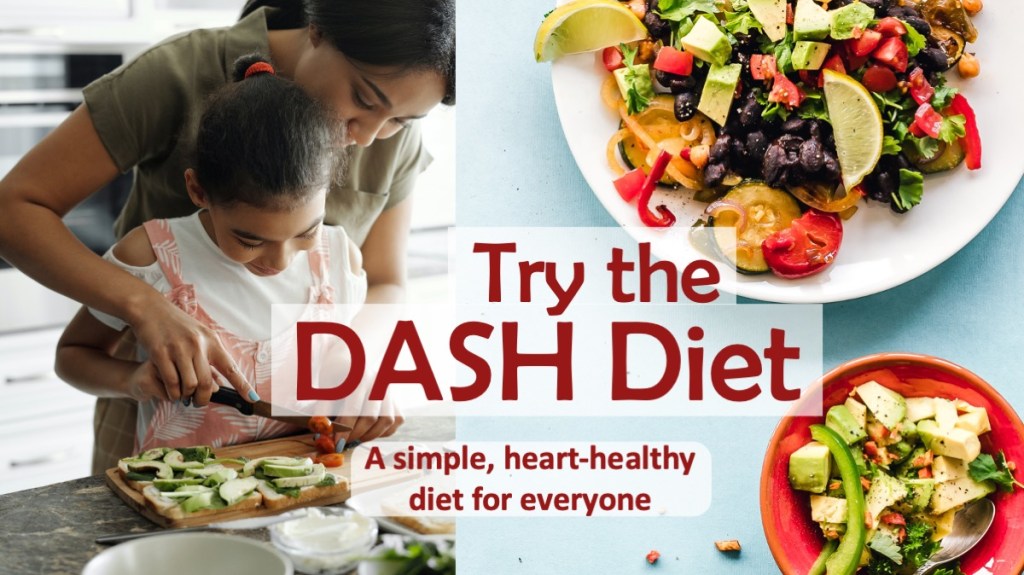
Heart disease is the number one cause of death in America. In addressing this national challenge, researchers created the DASH diet after following participants in a rigorous 5-year intervention called the Dietary Approaches to Stop Hypertension (DASH) Study. Hypertension, also known as high-blood pressure, is a major risk factor for heart disease, but can be managed with a healthy diet. The DASH diet was designed to be a nutrition-based approach to address the high rates of hypertension and heart disease associated with the typical high-sodium American diet. Most studies on nutrition use dietary recalls, looking at past diet history. In contrast, the DASH study participants were provided with food and their sodium intake was carefully controlled and monitored. The results of the DASH Diet Study demonstrated that diet alone is effective at reducing blood pressure!
The CDC recommends the average adult consumes less than 2,300 mg sodium per day. The DASH diet sets this as the beginning maximum, but about 90% of Americans are consuming far more than this. The average sodium consumption per day is an astounding 3,400 mg for U.S. adults! Just lowering one’s daily salt intake down to the CDC recommendation will be a major improvement for most people and will result in blood pressure reduction in a matter of weeks. The even more ambitious low-sodium DASH diet aims to gradually reduce your intake to 1,500 mg per day.
Most of the sodium we consume comes in the form of salt, which is added to processed foods for preservation and flavor. We can drastically lower our salt intake by focusing on whole foods which are naturally low in sodium.
The DASH diet emphasis the consumption of:
Fruits
Veggies
Whole grains
Lean protein
Low-Fat dairy
This combination is high in potassium, magnesium and calcium, and fiber, while low in saturated fats. All of these nutrients, particularly the potassium (which is abundant in vegetables) help naturally lower blood pressure and counteract the effects of excessive sodium. The DASH Diet also discourages foods high in saturated fat, such as red meat, as well as sugary beverages.
The DASH Diet is recommended by the American Heart Association and is ranked the best heart-healthy diet and second-best diet overall (it has often traded places with the very similar current #1 spot, the Mediterranean Diet, which you can read about here) by the U.S. News and World Report.
Gradual change is the key to success whenever making a positive change in life.
Here are some small changes you can make to ease yourself into DASH-style diet:
Add one serving of vegetables to your existing meals
Go meatless for 2+ days a week
Switch out some of your grains to whole, such as brown rice or whole wheat pasta
Add more herbs and spices to your meals, instead of salt
Snack on more whole foods, such as nuts or fruit
Below are some full meal plans designed by experts and more detailed resources.
A good night’s sleep should not be taken for granted. Not getting enough sleep is linked to increased risk for type 2 diabetes, heart disease, stroke, obesity, and depression. Exhaustion can also lead to vehicular accidents and mistakes at work.
Sufficient sleep is an essential component of a healthy lifestyle. It is recommended that most adults sleep 7-9 hours each night for optimal health. It is also important that your regular sleep is of good quality, so you feel rested when you wake.
Getting enough sleeps means less sickness, a healthy weight, lower health risks for serious health conditions, reduced stress, improved mood, clearer thinking, and better decision making.
Talk to your doctor if you often have trouble sleeping or still feel tired after sleeping as these are symptoms of a possible sleep disorder.
Good Sleep Habits
Go to bed at the same time and wake up at the same time, even on the weekends
Make sure your bedroom is quiet, dark, relaxing, and at a comfortable temperature
Remove electronic devices from the bedroom (i.e. TVs, computers, cell-phones)
Avoid large meals, caffeine, and alcohol before bedtime
Enjoy some physical activity before bedtime
Are you getting enough sleep?
Take the Sleep Hygiene Index below to see if you are getting enough sleep. Answer the following thirteen (13) questions. If after adding your total below, your score is 7 and above, consider trying the good sleep habits above.
I take daytime naps lasting 2 or more hours (Yes or No)
I go to bed at different times from day to day (Yes or No)
I get out of be at different times from day to day (Yes or No)
I exercise to the point of sweating within 1 hour of going to bed (Yes or No)
I stay in bed longer than I should 2 or 3 times a week (Yes or No)
I use alcohol, tobacco, or caffeine within 4 hours of going to bed (Yes or No)
I do something that may wake me up before bedtime (play video games, browse internet, clean) (Yes or No)
I go to bed feeling stressed, angry, upset, or nervous (Yes or No)
I use my bed for things other than sleep or sex (watching TV, reading, eating, studying) (Yes or No)
I sleep on an uncomfortable bed (poor mattress or pillow, too much or not enough blankets) (Yes or No)
I sleep in an uncomfortable bedroom (too bright, too stuffy, too hot, too cold, too noisy) (Yes or No)
I do important work before bedtime (pay bills, study) (Yes or No)
I think, plan, or worry when I am in bed (Yes or No)
Score
For every Yes add 1 point, for every No add 0 points. Add up your totals.
0-3 Very Good
4-6 Good
7-9 Poor
10-13 Very Poor
(Sleep Hygiene Index Adapted from Mastin, Bryson & Corwyn, 2006)
Please check out the sources below to learn more about the practicing good sleep habits. Please also share your thoughts about sleep and sleep hygiene in the comments section of this post or via our page on Facebook @WilkinsonWellnessLab.
By Shayna Bryan, Intern & UAB Community Health & Human Services Student
If you’ve ever spent time looking for healthy diets to follow, but wanted to avoid a highly restrictive diet (like vegan) or a commercial diet plan (like Weight Watchers), you probably have come across the Mediterranean Diet. It has been the subject of research for over 50 years and has been ranked the best overall diet by the U.S. News and World Report for four years running. The American Heart Association, the American Diabetes Association, the U.S. Department of Health and Human Services, the U.S. Department of Agriculture, and the World Health Organization have all endorsed the Mediterranean diet as a healthy and sustainable eating style that reduces risk for heart disease and Type 2 Diabetes. The Mediterranean Diet also may assist with weight loss in obese people and is associated with lower rates of depression, cognitive decline, cancer, and all-cause mortality.
This diet has a lot of major endorsements! So then, what’s up with this diet and why is it so special?
The Mediterranean Sea is a meeting point of three continents: Africa, Asia, and Europe. When health experts and researchers recommend the “Mediterranean Diet” they’re not talking about the food of just one people or one culture, but the common shared characteristics of the simple everyday meals made for centuries in this region of the world. Meals are built around plant-based foods, heavily seasoned with herbs and spice (though not tons of salt). These meals are made, shared, and enjoyed amongst a community of families and friends.
Here’s are the common characteristics of the Mediterranean Diet:
High consumption of vegetables, often raw or slightly cooked
Beans, nuts, legumes, seeds, potatoes, and unprocessed or whole grains
Olive oil as the principal source of fat
Fruit treated as a dessert
Moderate consumptions of fish, poultry, and dairy (mostly in the form of yogurt and cheese)
Low consumption of red meat
Moderate alcohol consumption, often in the form of red wine
Please check out the source below to learn more about the Mediterranean Diet. Please also share your thoughts about the Mediterranean Diet in the comments section of this post or via our page on Facebook @WilkinsonWellnessLab.
Every February since 1964, Americans have celebrated American Heart Month! Why? According to the CDC, heart disease is the leading cause of death among American adults and most ethnic/racial groups. Heart disease the body’s circulatory system, i.e. your veins and arteries. There are several forms of heart disease, but some of the most common include heart attack and coronary artery disease. According to the American Heart Association , a heart attack occurs when blood flow to the heart is interrupted, thus the oxygen supply to the heart muscle is reduced or completely cut off. This is important because the CDC estimates that 805,000 heart attacks occur annually in the United States.
Among Americans, non-Hispanic Black (African Americans) are at great risk for heart disease. The American Heart Association reports that about half of African-American women over the age of 20 have some form of heart disease, yet only about 1 out of 3 know their heart health risk. Around 50,000 African-American women die from cardiovascular disease annually. But we can prevent the deaths and reduce the number of our families impacted by heart disease. Here is what we can do:
Step 1: Learn your risk for heart disease.
Visit your doctor and ask for diagnostic tests for coronary heart disease. If you don’t have a personal physician or access to health care, contact Jefferson County Department of Health or your local county health department for assistance.
In general, any individual who has been diagnosed with any of these conditions is at risk for heart disease:
• Overweight or obesity • High blood pressure • Diabetes • Physical inactivity • Family history (first degree relative, such as a parent or sibling, who has had a heart attack or stroke before age 50)
Step 2: Work to reduce your risk of heart disease.
Eat healthy Add more fruits and vegetables to your diet. Five servings a day is the recommended minimum, so aim even higher by making vegetables half of your meal. Lower your sodium intake by eating more home cooked meals, instead of fast food. Drink water, not soda or juice which is high in added sugars.
Be active Aim for 150 minutes of physical activity every week. That’s only around 20 minutes a day. You can make walking part of your routine. Try going for a walk and talking to a friend on the phone. Any activity that elevates your heart rate will improve your health and help lower your risk.
Manage stress Stress management is important for heart health. Eating healthy and staying active can help keep your stress levels down. Learn what triggers your stress and address it by slowing down and engaging in meditation or breathing exercises.
Step 3: Always look for the signs of a heart attack
According to the American Heart Association, women are somewhat less likely than men to experience chest pain. Instead, they are more likely to experience:
Dizziness
Fatigue
Nausea
Pressure or tightness in the chest
Stomach pain
To learn more about heart disease in women, please click on the links above. Additional resources include the following links:








 Wilkinson Wellness Laboratory