Try the DASH Diet to Lower Your Blood Pressure & Promote Heart Health

by Shayna Bryan, Intern & UAB Community Health & Human Services Student
DASH Diet, Heart Healthy

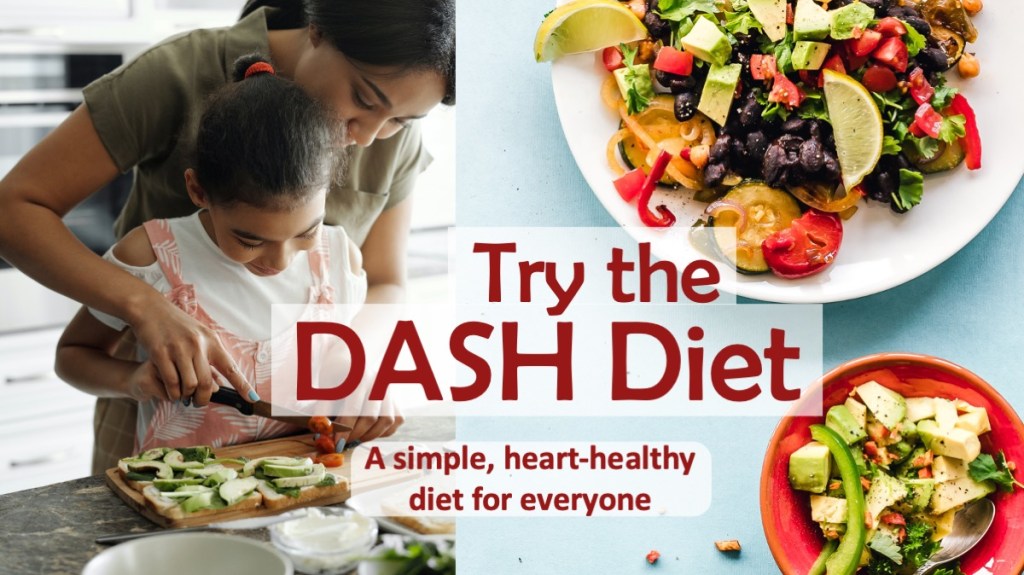
Heart disease is the number one cause of death in America. In addressing this national challenge, researchers created the DASH diet after following participants in a rigorous 5-year intervention called the Dietary Approaches to Stop Hypertension (DASH) Study. Hypertension, also known as high-blood pressure, is a major risk factor for heart disease, but can be managed with a healthy diet. The DASH diet was designed to be a nutrition-based approach to address the high rates of hypertension and heart disease associated with the typical high-sodium American diet. Most studies on nutrition use dietary recalls, looking at past diet history. In contrast, the DASH study participants were provided with food and their sodium intake was carefully controlled and monitored. The results of the DASH Diet Study demonstrated that diet alone is effective at reducing blood pressure!

The CDC recommends the average adult consumes less than 2,300 mg sodium per day. The DASH diet sets this as the beginning maximum, but about 90% of Americans are consuming far more than this. The average sodium consumption per day is an astounding 3,400 mg for U.S. adults! Just lowering one’s daily salt intake down to the CDC recommendation will be a major improvement for most people and will result in blood pressure reduction in a matter of weeks. The even more ambitious low-sodium DASH diet aims to gradually reduce your intake to 1,500 mg per day.

Most of the sodium we consume comes in the form of salt, which is added to processed foods for preservation and flavor. We can drastically lower our salt intake by focusing on whole foods which are naturally low in sodium.

The DASH diet emphasis the consumption of:

  • Fruits
  • Veggies
  • Whole grains
  • Lean protein
  • Low-Fat dairy

This combination is high in potassium, magnesium and calcium, and fiber, while low in saturated fats. All of these nutrients, particularly the potassium (which is abundant in vegetables) help naturally lower blood pressure and counteract the effects of excessive sodium. The DASH Diet also discourages foods high in saturated fat, such as red meat, as well as sugary beverages.

The DASH Diet is recommended by the American Heart Association and is ranked the best heart-healthy diet and second-best diet overall (it has often traded places with the very similar current #1 spot, the Mediterranean Diet, which you can read about here) by the U.S. News and World Report.


Gradual change is the key to success whenever making a positive change in life.

Here are some small changes you can make to ease yourself into DASH-style diet:

  • Add one serving of vegetables to your existing meals
  • Go meatless for 2+ days a week
  • Switch out some of your grains to whole, such as brown rice or whole wheat pasta
  • Add more herbs and spices to your meals, instead of salt
  • Snack on more whole foods, such as nuts or fruit

Below are some full meal plans designed by experts and more detailed resources.

Week on DASH

DASH Meal Planning Chart

Detailed DASH Eating Plan


Sources:

DASH Diet. (n.d.). Retrieved June 03, 2021, from https://health.usnews.com/best-diet/dash-diet

Dash eating plan. (n.d.). Retrieved June 03, 2021, from https://www.nhlbi.nih.gov/health-topics/dash-eating-plan

How to make the dash diet work for you. (2019, May 08). Retrieved June 03, 2021, from https://www.mayoclinic.org/healthy-lifestyle/nutrition-and-healthy-eating/in-depth/dash-diet/art-20048456

Sodium. (2020, September 08). Retrieved June 03, 2021, from https://www.cdc.gov/heartdisease/sodium.htm



Dry Eye Awareness Month

by Taylor Sullivan, M. Ed. | UAB Community Health & Human Services Alumni

July is Dry Eye Awareness Month

Dry eye is caused when the eyes do not make enough tears to stay moisturized or when the tears do not work correctly. Dry eyes can make your eyes feel uncomfortable and, in some cases, cause vision problems.

Dry eye is common and affects millions of Americans. There are several options available to help with dry eye while keeping eyes healthy and comfortable.


Symptoms of Dry Eye

  • Scratchy feeling as if something is in your eye
  • Stinging or burning feeling in your eye
  • Eye redness
  • Sensitivity to light
  • Blurry vision

Risks of Dry Eye

Anyone can get dry eye, but some are more at risk than others.

  • Those 50 years of age and older
  • Women
  • Contact lens wearers
  • Lack of Vitamin A
  • Certain autoimmune conditions
  • Too much screen time

Treatment depends on what causes your symptoms. Artificial tears are the most common treatment for mild dry eye. For severe dry eye, prescription medication may be necessary, but moisturizing gels and ointments are also available without a prescription.

Talk to your eye doctor today about dry eye and treatment and prevention options.


Take Care of Yourself!

by Adrienne Stokes, M. Ed. | UAB Community Health & Human Services Alumni

Photo by Alex Green on Pexels.com

The COVID-19 pandemic may be stressful, but you can get through it. Take care of yourself and cope with the stress by addressing your physical, emotional, and mental health.

Take care of your Physical Health through

  • Eating a balanced diet
  • Regular physical activity
  • Plenty of good sleep
  • Avoiding excessive alcohol and drug use

Take care of your Emotional Health through

  • Connecting with others
  • Taking a break (unwinding)
  • Staying informed (but avoiding too much exposure to news)
  • Seeking help when you need it

Take care of your Mental Mealth through

  • Meditation
  • Connecting with your faith-based organization
  • Continuing with your treatment and staying aware of new or worsening symptoms
  • Calling for help if needed

Black Mental Health Resources

• National Suicide Prevention Lifeline (800) 273-8255

• TC Counseling & Consulting (205) 377-5537

• Allworld Counseling & Consulting (205) 583-0237

• Strive Counseling Services (205) 721-9893

• Black Mental Health Alliance (410) 338-2642

• National Crisis Hotline (800) 273-8255

• The Crisis Center – Birmingham (205) 323-7777


REDUCING DISTRESSING PREGNANCIES AMONG BLACK WOMEN: TAKE ACTION

By Jaelyn Copeland (Community Health and Human Services Student), with contributions from Shayna Bryan (Intern & Community Health and Human Services Student)

Original photography by Mario Testino for Vogue magazine

Maternal mortality rates in the United States have been increasing steadily year after year, placing the country 56th on the World Health Organization’s worldwide data set, which is near the bottom of the developed nations. This disproportionately affects black women, who face not only the typical health hazards that come with childbirth, but must also wrestle with racial bias in the medical industry

Did you know black women are three times more likely to die due to pregnancy-linked causes than their peers?

According to the CDC, for every 100,000 births, 37 black women died in comparison to 15 white women and 12 Hispanic women. The causes of these racial differences are numerous. One of the issues is a lack of access to health care and poor quality of service. However, CDC data shows that even college-educated black women die at higher rates from pregnancy-related causes than white women who did not graduate from high school.

Look no further than Serena Williams, one of the greatest professional tennis players in history and an overall acclaimed athlete with a net worth over $200 million, whose pregnancy story demonstrates that these issues penetrate every level of society. In an interview with Vogue, Williams recalls battling with major problems shortly after the birth of her daughter. After her daughter was born through Cesarean section, Williams became short of breath. Knowing her own history of blood clots in the lungs (called pulmonary embolisms), she instantly alerted a nurse to her symptoms. However, staff were slow to respond to her concerns. The resulting complications ended in Williams needing a filter inserted into one of her major veins. It took six weeks of bed rest before she eventually returned home.

Serena’s traumatic story places her among the 50,000 women in America who face dangerous or life-threatening pregnancy-related problems each year.

However, researchers suggest this estimate may still be too conservative. Racial bias in the medical industry is a systemic issue that is becoming more recognized. The CDC has launched the Hear Her campaign to spread awareness and education on the complications associated with pregnancy. The lesson for the medical industry is to listen to patients more and make sure their needs are addressed. For the rest of us, the lesson is to learn to be your own best advocate.


Here are steps you can take:

  • Enroll in pre-natal care early, 1 month before pregnancy if possible
  • Take pre-natal vitamins as early as possible, even before becoming pregnant
    • Vitamins like folate are essential to brain and spinal cord development which occurs during the first few weeks of pregnancy
  • Learn the warning signs of common complications, particularly those you are at high risk for and those in your family medical history
  • Make stress management a priority
  • Speak up!
    • Create a list of questions to ask your doctor, make your concerns heard!
    • Keep a written record to help you and your doctor stay on track and accountable during appointments

PSA developed by Brittany Reynolds, Shayna Bryan, and Larrell Wilkinson

Sources:

Centers for Disease Control and Prevention. (2020, November 25). Pregnancy Mortality Surveillance System. Centers for Disease Control and Prevention. https://www.cdc.gov/reproductivehealth/maternal-mortality/pregnancy-mortality-surveillance-system.htm.

Centers for Disease Control and Prevention. (2021, March 24). About the Campaign. Centers for Disease Control and Prevention. https://www.cdc.gov/hearher/about-the-campaign/index.html.

Centers for Disease Control and Prevention. (2021, May 11). Urgent Maternal Warning Signs. Centers for Disease Control and Prevention. https://www.cdc.gov/hearher/maternal-warning-signs/index.html.

Fernandez, M. E. (2021, February 10). Why Black women are less likely to survive pregnancy, and what’s being done about it. http://www.heart.org. https://www.heart.org/en/news/2021/02/10/why-black-women-are-less-likely-to-survive-pregnancy-and-whats-being-done-about-it.

Haskell, R. (2018, January 10). Serena Williams on Motherhood, Marriage, and Making Her Comeback. Vogue. https://www.vogue.com/article/serena-williams-vogue-cover-interview-february-2018.

Lockhart, P. R. (2018, January 11). What Serena Williams’s scary childbirth story says about medical treatment of black women. Vox. http://www.vox.com/identities/2018/1/11/16879984/serena-williams-childbirth-scare-black-women.

Testino, M. (September 2017). Photograph of Serena Williams. Vogue.

WHO, UNICEF, UNFPA, World Bank Group, and United Nations Population Division Trends in Maternal Mortality: 2000 to 2017 Geneva: World Health Organization, 2019. Retrieved from: https://data.worldbank.


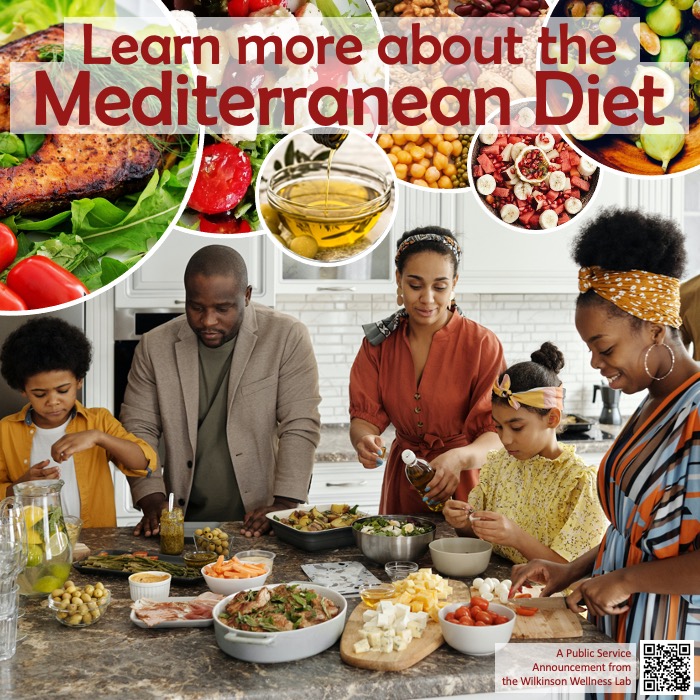
LET’S TAKE A LOOK AT THE MEDITERRANEAN DIET AND ITS BENEFITS

By Shayna Bryan, Intern & UAB Community Health & Human Services Student

If you’ve ever spent time looking for healthy diets to follow, but wanted to avoid a highly restrictive diet (like vegan) or a commercial diet plan (like Weight Watchers), you probably have come across the Mediterranean Diet. It has been the subject of research for over 50 years and has been ranked the best overall diet by the U.S. News and World Report for four years running. The American Heart Association, the American Diabetes Association, the U.S. Department of Health and Human Services, the U.S. Department of Agriculture, and the World Health Organization have all endorsed the Mediterranean diet as a healthy and sustainable eating style that reduces risk for heart disease and Type 2 Diabetes. The Mediterranean Diet also may assist with weight loss in obese people and is associated with lower rates of depression, cognitive decline, cancer, and all-cause mortality.

This diet has a lot of major endorsements! So then, what’s up with this diet and why is it so special?

The Mediterranean Sea is a meeting point of three continents: Africa, Asia, and Europe. When health experts and researchers recommend the “Mediterranean Diet” they’re not talking about the food of just one people or one culture, but the common shared characteristics of the simple everyday meals made for centuries in this region of the world. Meals are built around plant-based foods, heavily seasoned with herbs and spice (though not tons of salt). These meals are made, shared, and enjoyed amongst a community of families and friends.

Here’s are the common characteristics of the Mediterranean Diet:

  • High consumption of vegetables, often raw or slightly cooked
  • Beans, nuts, legumes, seeds, potatoes, and unprocessed or whole grains
  • Olive oil as the principal source of fat
  • Fruit treated as a dessert
  • Moderate consumptions of fish, poultry, and dairy (mostly in the form of yogurt and cheese)
  • Low consumption of red meat
  • Moderate alcohol consumption, often in the form of red wine

Please check out the source below to learn more about the Mediterranean Diet. Please also share your thoughts about the Mediterranean Diet in the comments section of this post or via our page on Facebook @WilkinsonWellnessLab.

Sources:

Mayo Foundation for Medical Education and Research. (2019, June 21). Mediterranean diet for heart health. Mayo Clinic. https://www.mayoclinic.org/healthy-lifestyle/nutrition-and-healthy-eating/in-depth/mediterranean-diet/art-20047801.

U.S. Department of Health and Human Services and U.S. Department of Agriculture. 2015 – 2020 Dietary Guidelines for Americans. 8th Edition. December 2015. Available at https://health.gov/our-work/food-nutrition/previous-dietary-guidelines/2015.

U.S. News & World Report. (n.d.). Mediterranean Diet. U.S. News & World Report. https://health.usnews.com/best-diet/mediterranean-diet.

What is the Mediterranean Diet? http://www.heart.org. (n.d.). https://www.heart.org/en/healthy-living/healthy-eating/eat-smart/nutrition-basics/mediterranean-diet.


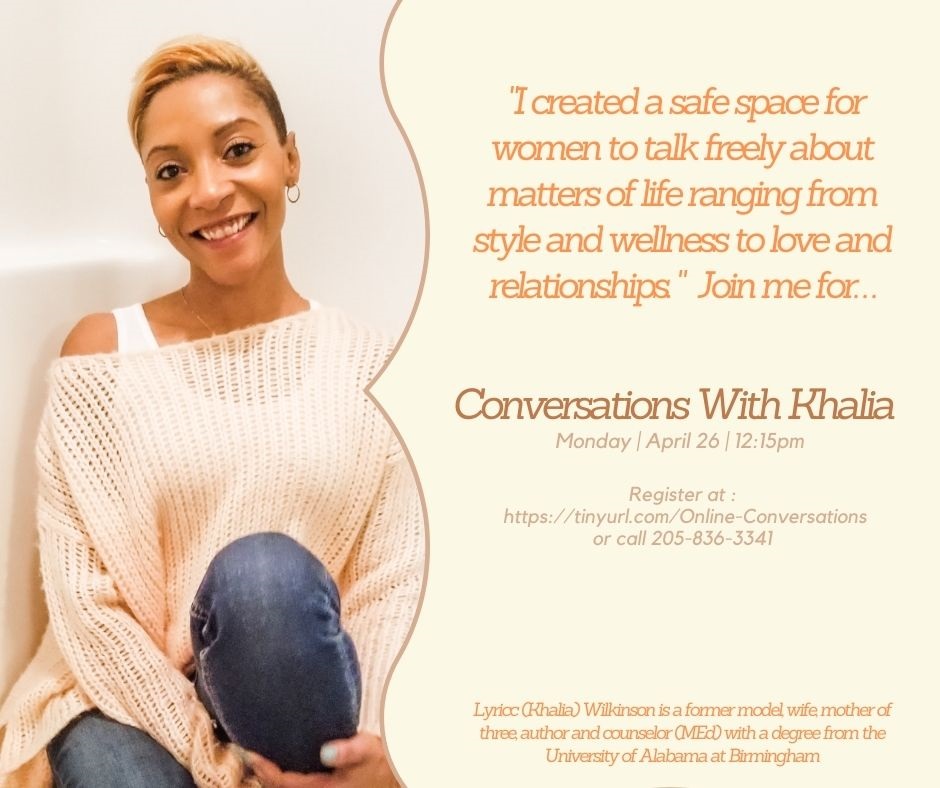
DOING SELF-CARE & BEING WELL: JOIN CONVERSATIONS WITH KHALIA EVERY FOUTH MONDAY

By: Flora Johnson, Intern

FLYER FROM EAST LAKE LIBRARY OF THE BIRMINGHAM PUBLIC LIBRARY SYSTEM

“What is missing is fun. We need to unplug and do something fun! It may sound cheesy, but having fun is self-care.” – Khalia Wilkinson

Are you ready to live well, be healthy, and walk into abundant life?  Conversations with Khalia is a platform designed for women to speak freely about matters of life. Conversations with Khalia is a virtual talk on women’s wellness hosted through the East Lake Branch of the Birmingham Library every fourth Monday of the month. Mrs. Khalia Wilkinson is a coach and minister working with women looking to ditch feeling stressed, overwhelmed, drained, and desiring to be accomplished, healthy, and thriving.  On April 26, 2021, she will host an online conversation at 12:15PM CST. You can register here (https://tinyurl.com/Online-Conversations) or call (205) 836-3341 to attend.

Khalia Wilkinson is a counselor and wellness coach with 15 years of experience mentoring and training women. She has written The Women’s COVID-19 Survival Guide to uplift women experiencing wellness withdrawals due to the sudden shifts in their schedules caused by the COVID-19 pandemic. The guide discusses in-depth how to navigate the required activities of daily living in this new unforeseen space while managing isolation, mental wellness, schedules, and self-care. She also hosts the Woman31 Podcast, a podcast rooted in biblical principles found in Proverbs, Chapter 31 with an accompanying website: Woman31.

Khalia believes that a woman’s health and well-being is foundational to ensuring all other scheduled family activities are successfully completed. The Women’s COVID-19 Survival Guide embraces concepts of self-care in support of one’s overall health and wellness.  The guide offers easy-to-perform tasks that can help individuals better manage their well-being.

Self-care is typically visualized as a spa day. However, Khalia suggests that adequate sleep, eating a healthy and satisfying meal, praying, laughing at a good movie, and/or speaking with a trusted and supportive friend are all excellent modes of self-care. Understanding where you are and what health areas you need to focus on is pivotal to living well.

Khalia says that mental health is vital to overall wellness. She suggested that seeking professional counseling is absolutely a “good thing” to do, especially when one is experiencing serious mental illness. She also mentioned that feeling negative emotions is a signal to our body that something is not “okay.” Thus, it is important to listen to our body and seek help. When asked if there was any wellness advice she could offer, she said, “Do something fun and find ways to get back to the activities we love, because it can be healthy for our bodies.” You can always connect with Mrs. Khalia Wilkinson on Instagram, @khalia.woman31.


LOWER YOUR STRESS, WALK FOR WELLNESS

By Shayna Bryan, Intern & UAB Community Health & Human Services Student

Photo by Uriel Mont on Pexels.com

Managing your stress and anxiety is important for long-term health and wellness. Healthy stress management improves resiliency, especially when times are tough, but it can be tricky to put into practice. There are a lot of pressures in everyday life that demand attention so taking care of your own mental health can feel difficult to prioritize. The very pressure to manage your stress can be stressful itself, but finding healthy ways to cope with stress is good for your mind and body. Reducing your stress also reduces your risk for cardiovascular disease and supports healthy immune system functioning.  

If thinking about stress management is at all overwhelming and you just want somewhere to start, there’s a simple solution: Go for a walk. 

Walking is easy and you already know how to do it. Other common methods of stress-relief like yoga and meditation take skill and practice, but anyone can go for a walk. It gives you time to yourself away from the usual distractions and is a low-impact aerobic exercise. If you’re new to tackling your stress and feeling overwhelmed at all, walking is effective and can quickly become part of your daily routine. It’s low-stress stress relief for beginners! 

Here are a few things to keep in mind as you plan your wellness walk: 

  1. Walk outside. Being outside among nature is good for your, mental-wellbeing, particularly if you live in a city. 
  1. Walk for at least 20-30 minutes. If you’re not sure how to plan a walking route, just pick a direction and walk for 10-15 minutes, then turn around and walk back.  
  1. Take deep calming breaths while you walk. Breathe in for 5 seconds while expanding your whole chest, then exhale slowly. 
  1. It is safe to walk outside without a mask, provided you are more than 6 feet from the nearest person. Take a mask with you anyway, for safety. 
  1. Use this time to take a break from the news and social media. Focus only on enjoying the moment. 

Sources: 

CDC. Mental health and coping during covid-19. (n.d.). Retrieved March 18, 2021, from https://www.cdc.gov/coronavirus/2019-ncov/daily-life-coping/managing-stress-anxiety.html 

Hunter, M. R., Gillespie, B. W., & Chen, S. Y. (2019). Urban nature experiences reduce stress in the context of daily life based on salivary biomarkers. Frontiers in Psychology, 10. doi:10.3389/fpsyg.2019.00722 


CDC’s Commitment to Addressing Racism as an Obstacle to Health Equity

Photo by Kelly Lacy on Pexels.com

Commentary drawn from Center for Disease Control & Prevention (CDC) Media Statement & Website released Thursday, April 8 2021

According to the CDC (2021),…”Racism—both interpersonal and structural —negatively affects the mental and physical health of millions of people, preventing them from attaining their highest level of health, and consequently, affecting the health of our nation. A growing body of research shows that centuries of racism in this country has had a profound and negative impact on communities of color. The impact is pervasive and deeply embedded in our society—affecting where one lives, learns, works, worships and plays and creating inequities in access to a range of social and economic benefits—such as housing, education, wealth, and employment. These conditions—often referred to as social determinants of health—are key drivers of health inequities within communities of color, placing those within these populations at greater risk for poor health outcomes.”

The CDC is committed to ensuring every person has the opportunity to live a healthy life. To that end, CDC—as the nation’s leading public health agency—has established this web portal, “Racism and Health” to serve as a hub for our activities, promote a public discourse on how racism negatively affects health and communicate potential solutions. Working with the broader public health community, the CDC will serve as a catalyst to further investigate the impact of racism on health and efforts to achieve health equity for all.

As the nation’s leading public health agency, other efforts from the CDC in addressing the impact of racism on public health include:

  • Continuing to study the impact of social determinants on health outcomes, expand the body of evidence on how racism affects health, and propose and implement solutions to address this.
  • Making new and expanded investments in racial and ethnic minority communities and other disproportionately affected communities around the country, establishing a durable infrastructure that will provide the foundation and resources to address disparities related to COVID-19 and other health conditions.
  • Expanding internal agency efforts to foster greater diversity and create an inclusive and affirming environment for all.

For more information about the CDC’s efforts in addressing Racism & Health, please visit https://www.cdc.gov/healthequity/racism-disparities/index.html. Also, feel free to share your thoughts and concerns regarding racism here in the comments section, or engage with us at the Wilkinson Wellness Lab on Facebook, Twitter, or Instagram.


Let’s Be #VACCINEREADY for National Minority Health Month 2021

Photo by RF._.studio on Pexels.com

Bulletin from the U.S. Department of Health & Human Services Office of Minority Health

April is National Minority Health Month, and this year, the HHS Office of Minority Health (OMH) is focusing on the impacts COVID-19 is having on racial and ethnic minority and American Indian and Alaska Native communities and underscoring the need for these vulnerable communities to get vaccinated as more vaccines become available. According to the Center for Disease Control and Prevention (CDC), certain vulnerable populations, such as non-Hispanic African Americans, individuals living in nonmetropolitan areas, and adults with lower levels of education, income or who do not have health insurance, have a higher likelihood of forgoing getting vaccinated.

The theme for National Minority Health Month is #VaccineReady. The goal of this effort is to help communities at higher risk of COVID-19 to:

Studies show that COVID-19 vaccines are effective at keeping people from getting COVID-19 and the CDC recommends that everyone get vaccinated as soon as they are eligible and vaccines are available.

So let’s work together. Please leave a comment on how you are becoming #VaccineReady. Please continue to check in with the Wilkinson Wellness Laboratory through Facebook, Instagram, & Twitter for updates during National Minority Health Month as we place a focus on our health and our community.


WOMEN, BE SMART ABOUT YOUR HEART!

By Shayna Bryan (UAB Community Health & Human Services Intern) and Dr. Larrell L. Wilkinson

Photo by cottonbro on Pexels.com

Every February since 1964, Americans have celebrated American Heart Month! Why? According to the CDC, heart disease is the leading cause of death among American adults and most ethnic/racial groups. Heart disease the body’s circulatory system, i.e. your veins and arteries. There are several forms of heart disease, but some of the most common include heart attack and coronary artery disease. According to the American Heart Association , a heart attack occurs when blood flow to the heart is interrupted, thus the oxygen supply to the heart muscle is reduced or completely cut off. This is important because the CDC estimates that 805,000 heart attacks occur annually in the United States.

Among Americans, non-Hispanic Black (African Americans) are at great risk for heart disease. The American Heart Association reports that about half of African-American women over the age of 20 have some form of heart disease, yet only about 1 out of 3 know their heart health risk. Around 50,000 African-American women die from cardiovascular disease annually. But we can prevent the deaths and reduce the number of our families impacted by heart disease. Here is what we can do:

Step 1: Learn your risk for heart disease.

Visit your doctor and ask for diagnostic tests for coronary heart disease. If you don’t have a personal physician or access to health care, contact Jefferson County Department of Health or your local county health department for assistance.

In general, any individual who has been diagnosed with any of these conditions is at risk for heart disease:

• Overweight or obesity
• High blood pressure
• Diabetes
• Physical inactivity
• Family history (first degree relative, such as a parent or sibling, who has had a heart attack or stroke before age 50)

Step 2: Work to reduce your risk of heart disease.

Photo by Laura James on Pexels.com

Eat healthy
Add more fruits and vegetables to your diet. Five servings a day is the recommended minimum, so aim even higher by making vegetables half of your meal. Lower your sodium intake by eating more home cooked meals, instead of fast food. Drink water, not soda or juice which is high in added sugars.

Be active
Aim for 150 minutes of physical activity every week. That’s only around 20 minutes a day. You can make walking part of your routine. Try going for a walk and talking to a friend on the phone. Any activity that elevates your heart rate will improve your health and help lower your risk.

Manage stress
Stress management is important for heart health. Eating healthy and staying active can help keep your stress levels down. Learn what triggers your stress and address it by slowing down and engaging in meditation or breathing exercises.

Step 3: Always look for the signs of a heart attack

According to the American Heart Association, women are somewhat less likely than men to experience chest pain. Instead, they are more likely to experience:

  • Dizziness
  • Fatigue
  • Nausea
  • Pressure or tightness in the chest
  • Stomach pain

To learn more about heart disease in women, please click on the links above. Additional resources include the following links:

https://www.goredforwomen.org/en/about-heart-disease-in-women/signs-and-symptoms-in-women/symptoms-of-a-heart-attack

https://www.heart.org/en/health-topics/consumer-healthcare/what-is-cardiovascular-disease/african-americans-and-heart-disease-stroke

https://www.heart.org/-/media/phd-files-2/science-news/2/2021-heart-and-stroke-stat-update/2021_stat_update_factsheet_black_race_and_cvd.pdf?la=en

https://www.heart.org/en/healthy-living/healthy-lifestyle/stress-management/stress-and-heart-health