Feria de Salud Revive on Noviembre 2, 2024 at 10:00am – 2:00pm

En Espanola
El Laboratorio de Bienestar de Wilkinson se complace en asociarse con el Programa de Salud y Servicios Humanos Comunitarios de la UAB y la Iglesia Vida Cristiana en apoyo de la Feria de Salud Revive el sábado 7 de octubre de 2023. La feria de salud se llevará a cabo en 2490 Valleydale Road y se llevará a cabo de 9 a. m. a 1 p. m. Como recurso para la feria de salud, el Laboratorio de Bienestar de Wilkinson ofrece:

  • Detección de presión arterial,
  • Lectura del índice de masa corporal,
  • Lectura del porcentaje de grasa corporal y
  • Lectura del porcentaje de músculo esquelético

Para obtener más recursos que le ayuden a alcanzar sus objetivos de peso general, haga clic en los enlaces siguientes:

Alimentación saludable para adultos: https://www.myplate.gov/es/tip-sheet/alimentacion-saludable-para-adultos

Alimentación saludable para niños: https://eclkc.ohs.acf.hhs.gov/sites/default/files/pdf/healthy-eating-family-tips-esp.pdf

In English

The Wilkinson Wellness Lab is excited to partner with the UAB Community Health & Human Services Program and Christian Life Church in support of the Revive Health Fair on Saturday, October 7, 2023. The health fair is located at 2490 Valleydale Road and will take place 9am – 1pm. As a resource for the health fair, the Wilkinson Wellness Lab is providing:

  • Blood pressure screening,
  • Body Mass Index reading,
  • Body Fat percentage reading, and
  • Skeletal muscle percentage reading

For more resources in support of achieving your overall weight goals, please click on the links below:

Food

Physical Activity

Sleep

Body Mass Index

https://www.cdc.gov/healthyweight/assessing/bmi/adult_bmi/

Join the conversation on Facebook or in the comments section. Have you lost weight over a process? What did you do lose weight? How long did the weight loss take you? How was your experience? Please share with family and friends.


Restful sleep supports reduced stress. Let’s try it for ourselves

By the Wilkinson Wellness Lab

Are we trying to stay up so we can cram for the test? Perhaps we hung out too late and now we are feeling it in the morning. Maybe we drank to much Starbucks and we want to go to sleep, but just can’t. Or perhaps, we are a little worried about the paper that needs to be written and it is haunting us…no sleep. Either way, are sleep is impacted, which is still detrimental to our ability to cope with stress and support our mental health.

According to a study by Scott et al. (2021), improving sleep quality leads to better mental health. Other organizations like the Centers for Disease Control and Prevention (CDC) and the Sleep Foundation, also suggest the connection is relevant and asserts the connection to how we handle stress. Thusly, to improve mental health and stress management, it is a good idea to practice a sleep routine. A sleep routine is a a set of activities you do before bed each night to help you fall asleep. Some steps to include in creating your sleep routine may involve:

Setting a consistent sleep schedule: Go to bed and wake up at the same time every day, even on weekends to support your body’s rhythm.

Create a relaxing bedtime routine: Engage in calming activities before bed. Activities may include reading, warm baths, deep breathing exercises and meditation.

Create a calming sleep environment: Ensure your bedroom is cool, dark, and quiet. If needed, invest in an eye cover or ear plugs to limit noise and intrusions.

Limit exposure to screen: Reduce blue light exposure from phones, tablets, and computers at least an hour before bedtime.

Monitor your diet before bed: Avoid large meals, caffeine, and alcohol close to bedtime. These can disrupt your sleep cycle.

Be active during the day: Regular physical activity can help you fall asleep faster and enjoy deeper sleep. But try not to work-out close to bedtime.

Stress management: Techniques like placing your thoughts out of your head and elsewhere (i.e., journaling), yoga, and mindfulness can help reduce stress prior to your bedtime.

Have you tried these techniques above? If so, how did you do it? If not, what is hindering you from trying? Perhaps you tried, but when times became stressful, so stop working to solidify your routine. What next steps do you suggest? Please share your thoughts in the comment section and or visit us on Facebook @WilkinsonWellnessLab.


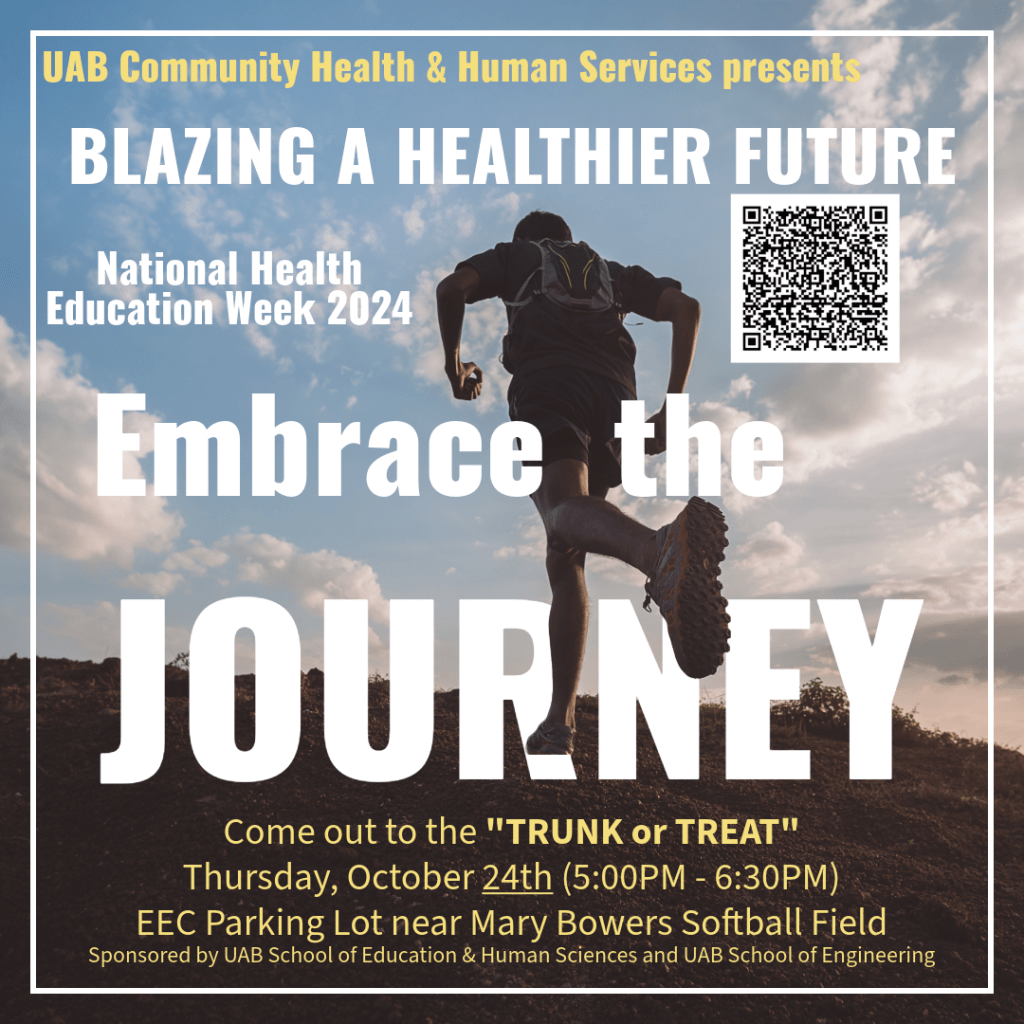
UAB Community Health & Human Services Program sponsors National Health Education Week 2024

Please join the UAB Community Health & Human Services (CHHS) Program at our mental health and wellness outreach table on Tuesday, October 22nd (10am – 1pm). We will have a few items in support of overall student health and well-being, while also equipping ourselves with mental wellness techniques to exercise through the remainder of the semester. Check us out in the Education & Engineering Complex (EEC). See the flyer below.

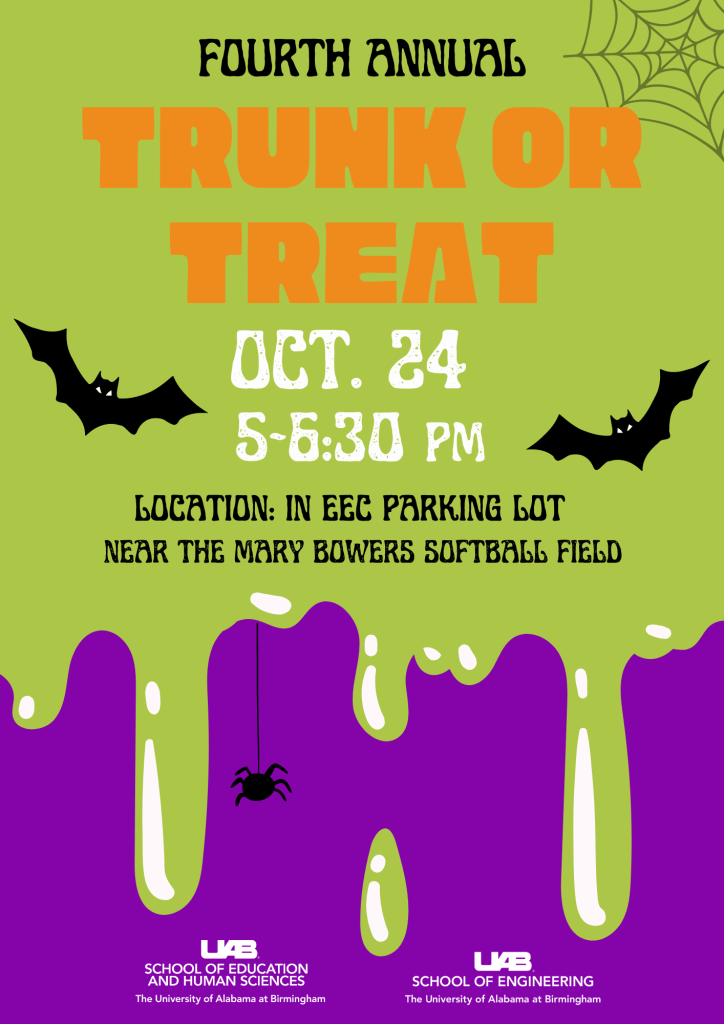
Please join the UAB Community Health & Human Services (CHHS) Program and have a good time ‘moving’ at the School of Education & Human Sciences “Trunk or Treat” event on Tuesday, October 24th (5:00pm – 6:30pm). The CHHS Program will provide the sounds that keep you ‘moving and grooving’ as you visit different trunks to get your treats. Come out and play corn hole, dance in streets, and get some candy. We will have a few items in support of overall student health and well-being. Check us out in the Education & Engineering Complex (EEC). See the flyer below.

Tips for Physical, Mental, & Emotional Well-Being

To learn more about National Health Education Week, please visit the Society for Public Health Education (SOPHE) website, here. To learn more about emotional wellness in the United States of America, please visit the Centers for Disease Control & Prevention (CDC) weblink, here. Regarding ones physical health, the CDC recommends the following, here.


Empowering ourselves to tackle food insecurity in Alabama

by Haleigh Horton | UAB Community Health & Human Services Program Student

Photo by RDNE Stock project on Pexels.com

Food insecurity is a significant issue affecting communities across the United States, including Alabama’s Black Belt region. In addition to compromising physical health, lack of access to nutritious food exacerbates socioeconomic disparities. Building
healthier, more resilient communities requires understanding the root causes of food insecurity and implementing sustainable
solutions.

There are significant barriers to accessing affordable, nutritious food in Alabama’s Black Belt. Several factors contribute to high
rates of food insecurity, including limited grocery options, transportation challenges, and economic hardship (Harris, 2023).
Because of this, many people consume low-quality, processed foods that are high in calories but lack essential nutrients, resulting in obesity, malnutrition, and chronic diseases.

Food insecurity needs to be addressed through a multifaceted approach that addresses all levels of influence. Among the measures include increasing economic opportunities, improving access to affordable, nutritious foods, and promoting community-level interventions such as urban gardening initiatives and farmers’ markets.

It’s important to note that individuals and families can make healthier food choices within their means by becoming aware of the importance of healthy eating and learning about nutrition and meal planning (Harris, 2023). Urban agriculture and community gardens: It is possible to increase access to fresh produce as well as empower residents to take control of their food supply by
setting up community gardens and urban farming initiatives in underserved areas (Harris, 2023). These initiatives not only provide nutritious food but also promote community engagement and sustainability.

Policy advocacy and food assistance programs provide essential food resources to vulnerable populations with food
assistance programs such as SNAP (Supplemental Nutrition Assistance Program) and WIC (Women, Infants, and Children)
(Harris, 2023). As a further step, develop policies that tackle systemic barriers to food access, such as food deserts and inequities in resource distribution.

To address the issue of food insecurity in Alabama’s Black Belt, it is imperative to take a holistic approach that addresses the underlying socioeconomic, cultural, and environmental factors that contribute to the problem. Thru the implementation of targeted interventions at multiple levels, we can build healthier, more resilient communities in which everyone has the opportunity to achieve their full potential and is able to access nutritious food.

How are you addressing food insecurity? What methods are you or your community using to combat food insecurity in your community. Share here and on our Facebook page at Wilkinson Wellness Lab.

References

Fielding, S. (2022, October 15). Food insecurity is tied to poor mental health. Verywell Mind. https://www.verywellmind.com/biden-administration-food-insecurity-poor-mental-health-6748799

Food insecurity: A year-round health concern. Andalusia Health. (2023, February 1). https://www.andalusiahealth.com/news/food-insecurity

Harris, S. (2023, November 1). Adequate access to nutritious food is associated with better health for people of all ages. Alabama’s Health. https://www.alabamapublichealth.gov/blog/2023/11/sho-november.html#:~:text=While%20food%20insecurity%20affects%20all,white%
20Alabamians%20are%20food%20insecure.


Healthy habits while enjoying fun in the sun

By Haleigh Horton | UAB Community Health & Human Services Program Student

Photo by Kindel Media on Pexels.com

As we approach spring and then move into the summer, it is important to begin considering again our exposure to the sun. Did you know that the beautiful rays that we get from sunlight may also pose a risk to yours and your child’s skin? Focusing on children, it is important to learn how sunshine can affect your child’s skin and learn simple steps to protect them. From wearing protective clothing to using sunscreen, these practices can safeguard your family from harm and promote a healthier sunshine habits. Specific to southern United States, where the sun’s warmth is abundant, it’s vital to be aware of the potential risks posed to children’s delicate skin from harmful UV exposure. Extended sun exposure can lead to various health issues, particularly for children with sensitive skin. The risks go beyond sunburn, encompassing long-term consequences such as premature aging and an increased risk of skin cancer.

To protect children, proactive measures like wearing protective clothing, applying sunscreen, and seeking shade during peak sunlight hours are important. Embracing sun protection practices ensures the enjoyment of the outdoors while minimizing potential harm to young skin, promoting a healthier future for our little ones. To turn these practices into habits, it is important to incorporate sun protection measures into your daily routine. Wearing protective clothing and adding sunscreen through daily when applying lotion not only reduce the risk of skin cancer, including severe forms like melanoma, but also prevent sunburn, signaling skin damage. Additionally, embracing sun protection promotes
overall skin health by maintaining moisture, preventing dryness, and minimizing premature aging. Sun protection is regarded has not only a benefit to ones long term health, but also is recognized as a part of one self-care regimen. Thusly, wearing wide-brimmed hats and long sleeves, becomes a proactive measure against harmful UV rays. Applying broad-spectrum sunscreen with a high SPF (i.e., 30 SPF or higher) before outdoor activities (i.e., including school or extracurricular activities) offers an additional layer of defense. Seeking shade during peak sunlight hours, typically between 10 a.m. and 4 p.m., becomes a strategic choice to minimize direct sun exposure.

As parents in the South, protecting our children from sun exposure is vital. During spring and summer months, let’s remember to cover up, use the right sunscreen, and be
mindful of peak sunlight hours. Understanding the risks of skin cancer and premature aging highlights the importance of consistent sun protection. By prioritizing sun safety, we contribute to our children’s long-term wellbeing, shaping a healthier future. Let’s champion our kids health together, ensuring our children thrive while under the sun and foster a culture of skin health awareness. For more information about, please visit the Centers for Disease Control and Prevention’s (CDC) website on sun safety here. Do you have additional sun safe tips to share? If so, please share in the comments section here and/or share on a Facebook page @WilkinsonWellnessLab.

References

American Academy of Dermatology Association (n.d.). Sunscreen FAQs. https://www.aad.org/media/stats-sunscreen

Raymond-Lezman, J. R., & Riskin, S. (2023). Attitudes, Behaviors, and Risks of Sun Protection to Prevent Skin Cancer Amongst Children, Adolescents, and Adults. Cureus15(2), e34934. https://doi.org/10.7759/cureus.34934

Salvado, M., Fraga, A., Marques, D. L., Pires, I. M., Gonçalves, C. C., & Silva, N. M. (2021).
Sun Exposure in Pediatric Age: Perspective of Caregivers. Children (Basel, Switzerland),
8(11), 1019. https://doi.org/10.3390/children8111019

SickKids staff. (2024). What’s the best way to protect kids’ skin from sunburn?
HealthyChildren.org. https://www.healthychildren.org/English/tips-tools/ask-the-pediatrician/Pages/whats-the-best-way-toprotect-kids-skin-from-sunburn.aspx


Supporting local efforts, the Revive Health Fair on October 7, 2023

The Wilkinson Wellness Lab is excited to partner with the UAB Community Health & Human Services Program and Christian Life Church in support of the Revive Health Fair on Saturday, October 7, 2023. The health fair is located at 2490 Valleydale Road and will take place 9am – 1pm. As a resource for the health fair, the Wilkinson Wellness Lab is providing:

  • Blood pressure screening,
  • Body Mass Index reading,
  • Body Fat percentage reading, and
  • Skeletal muscle percentage reading

For more resources in support of achieving your overall weight goals, please click on the links below:


Food

Physical Activity

Sleep

Body Mass Index

https://www.cdc.gov/healthyweight/assessing/bmi/adult_bmi/

Join the conversation on Facebook or in the comments section. Have you lost weight over a process? What did you do lose weight? How long did the weight loss take you? How was your experience? Please share with family and friends.


RA: Rheumatoid Arthritis – An Autoimmune Disease

Reginia Dodson | UAB Community Health and Human Services Intern

Photo by Ron Lach on Pexels.com

Rheumatoid Arthritis (RA) is an auto immune disease, which, indicates that the immune system is attacking healthy cells. This causes inflammation and pain. Rheumatoid arthritis, predominantly attacks the joints, however, many joints can be attacked simultaneously. RA commonly affects knees, wrist, and hands. RA causes damage to joint tissue, and long, lasting chronic pain, loss of balance, and deformity. RA can also affect other tissues in the body such as eyes, heart, and lungs.

What causes rheumatoid arthritis? The specific causes unknown, but the CDC states that there are factors that can increase the risk. There are a can begin at any age, the onset is highest among adults in their 60s. Gender can also impact the risk of RA, as women or 2 to 3 times higher to report RA than men. Genetics play a role as well, “genes, called HLA (human leukocyte antigen) class II genotypes, can also make your arthritis worse.” (CDC, 2020).

Other factors that increase risk include as can smoking and obesity, “Studies examining the role of obesity also found that the more overweight a person was, the higher his or her risk of developing RA became.” (CDC, 2020). There are factors within our control, and some factors outside of our control but it is important to do what you can to reduce the risk, especially if you have a family history of RA.

Though rheumatoid arthritis cannot be cured, it’s important to discuss options with your doctor if you begin showing signs or symptoms.

References:

Centers for Disease Control and Prevention. (2020b, July 27). Rheumatoid arthritis (RA). Centers for Disease Control and Prevention. https://www.cdc.gov/arthritis/basics/rheumatoid-arthritis.html


Help America’s Children Battle Obesity!

Reginia Dodson | UAB Community Health and Human Services Intern

Photo by Anna Tarazevich on Pexels.com

We all know that obesity is a trending issue in the United States of America. Between junk food, desserts, fast food, and the cost of healthy foods, many things counterproductive to fight obesity. It seems as if the target for obesity is becoming younger and younger. Increased obesity rates are becoming more evident in the children of the United States of America. Obesity-related conditions such as diabetes, high blood pressure, high cholesterol, asthma, sleep apnea, and joint problems can be directly correlated to being obese.

According to the Centers for Disease Control:

  • Childhood obesity affects approximately 19.7% of children and adolescents.
  • The prevalence of obesity among different races among children ages two to 19 years. They are as follows:
    • Hispanic children: 26.2%
    • African-American children: 24.8%
    • Non-Hispanic white children: 16.6%
    • Asian- American children: 9%

The good news is childhood obesity is a preventable condition. Providing families with community resources where they can obtain healthy foods for free or low cost can help in the fight against childhood obesity. Encouraging physical activity and minimizing screen time increases the likelihood to win the battle. Remember if you are modeling healthier lifestyle habits, children can easily adapt to better eating habits and increased physical activity.

References:

Centers for Disease Control and Prevention. (2022, September 27). Obesity, race/ethnicity, and covid-19. Centers for Disease Control and Prevention. https://www.cdc.gov/obesity/data/obesity-and-covid-19.html


Why Many Men Avoid the Doctor

By Terrie Johnson | UAB Community Health & Human Services Intern

Photo by RF._.studio on Pexels.com

Some men avoid the doctor. It may be due to work, masculinity, expense or simply underestimating the issue causing symptoms. This issue limits the rate at which men would seek care for their underlying conditions. Thus, outlining the reasons this population segment does not access medical care on time would help solve the challenge.

The current societal paradigms define a man based on his masculinity. This exemplification is part of the reason men do not seek timely medical care. In other words, based on societal norms, they develop stereotypical perspectives that they should demonstrate strength and perseverance (Handcock, 2022). This inclination is responsible for most seeking to stay away from care facilities to avoid being weaklings. In some cases, men avoid healthcare services citing reasons such as being preoccupied with work duties. Additionally, most men are likely to ignore vital health warning signs (Handcock, 2022). In some cases, they could fear diagnosis outcomes, thus, choose to stay away from hospitals.

The issue among men regarding the lack of criticality in seeking timely medical care can be remedied through varied strategic approaches. For example, mitigating harmful masculinity perspectives, such as avoiding care facilities to appear strong, is relevant. Other than this intervention, educating men on the need to value their health as their occupation. This consideration will promote a desire to seek timely medical care. Therefore, the above approaches may cement criticality among men to visit care facilities immediately when needed.

Reference

Handcock, M. (2022). ‘It’ll get better on its own’: Men and their resistance to seeing a doctor. The Health Policy Partnership. Retrieved from https://www.healthpolicypartnership.com/itll-get-better-on-its-own-men-and-their-resistance-to-seeing-a-doctor/#:~:text=But%20why%20are%20many%20men,seek%20medical%20attention%20than%20women.