Restful sleep supports reduced stress. Let’s try it for ourselves

By the Wilkinson Wellness Lab

Are we trying to stay up so we can cram for the test? Perhaps we hung out too late and now we are feeling it in the morning. Maybe we drank to much Starbucks and we want to go to sleep, but just can’t. Or perhaps, we are a little worried about the paper that needs to be written and it is haunting us…no sleep. Either way, are sleep is impacted, which is still detrimental to our ability to cope with stress and support our mental health.

According to a study by Scott et al. (2021), improving sleep quality leads to better mental health. Other organizations like the Centers for Disease Control and Prevention (CDC) and the Sleep Foundation, also suggest the connection is relevant and asserts the connection to how we handle stress. Thusly, to improve mental health and stress management, it is a good idea to practice a sleep routine. A sleep routine is a a set of activities you do before bed each night to help you fall asleep. Some steps to include in creating your sleep routine may involve:

Setting a consistent sleep schedule: Go to bed and wake up at the same time every day, even on weekends to support your body’s rhythm.

Create a relaxing bedtime routine: Engage in calming activities before bed. Activities may include reading, warm baths, deep breathing exercises and meditation.

Create a calming sleep environment: Ensure your bedroom is cool, dark, and quiet. If needed, invest in an eye cover or ear plugs to limit noise and intrusions.

Limit exposure to screen: Reduce blue light exposure from phones, tablets, and computers at least an hour before bedtime.

Monitor your diet before bed: Avoid large meals, caffeine, and alcohol close to bedtime. These can disrupt your sleep cycle.

Be active during the day: Regular physical activity can help you fall asleep faster and enjoy deeper sleep. But try not to work-out close to bedtime.

Stress management: Techniques like placing your thoughts out of your head and elsewhere (i.e., journaling), yoga, and mindfulness can help reduce stress prior to your bedtime.

Have you tried these techniques above? If so, how did you do it? If not, what is hindering you from trying? Perhaps you tried, but when times became stressful, so stop working to solidify your routine. What next steps do you suggest? Please share your thoughts in the comment section and or visit us on Facebook @WilkinsonWellnessLab.



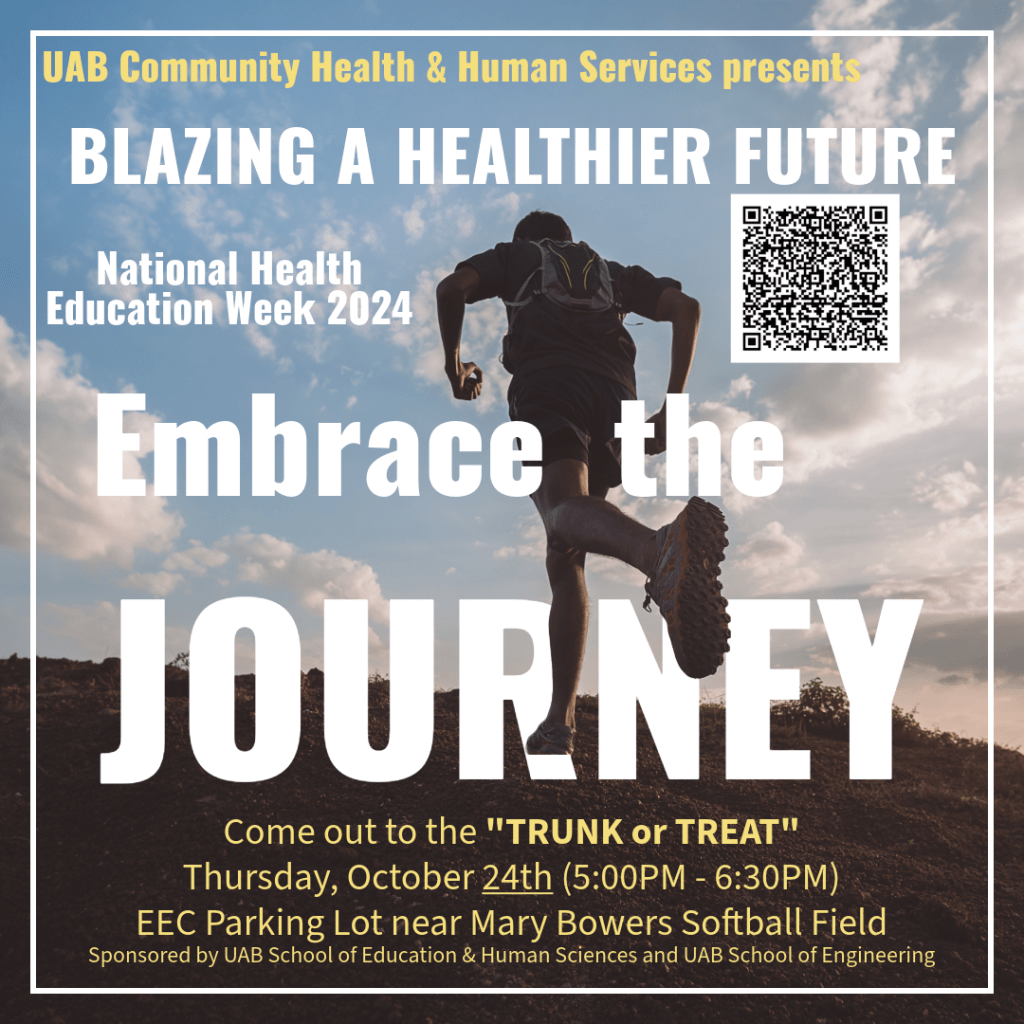
UAB Community Health & Human Services Program sponsors National Health Education Week 2024

Please join the UAB Community Health & Human Services (CHHS) Program at our mental health and wellness outreach table on Tuesday, October 22nd (10am – 1pm). We will have a few items in support of overall student health and well-being, while also equipping ourselves with mental wellness techniques to exercise through the remainder of the semester. Check us out in the Education & Engineering Complex (EEC). See the flyer below.

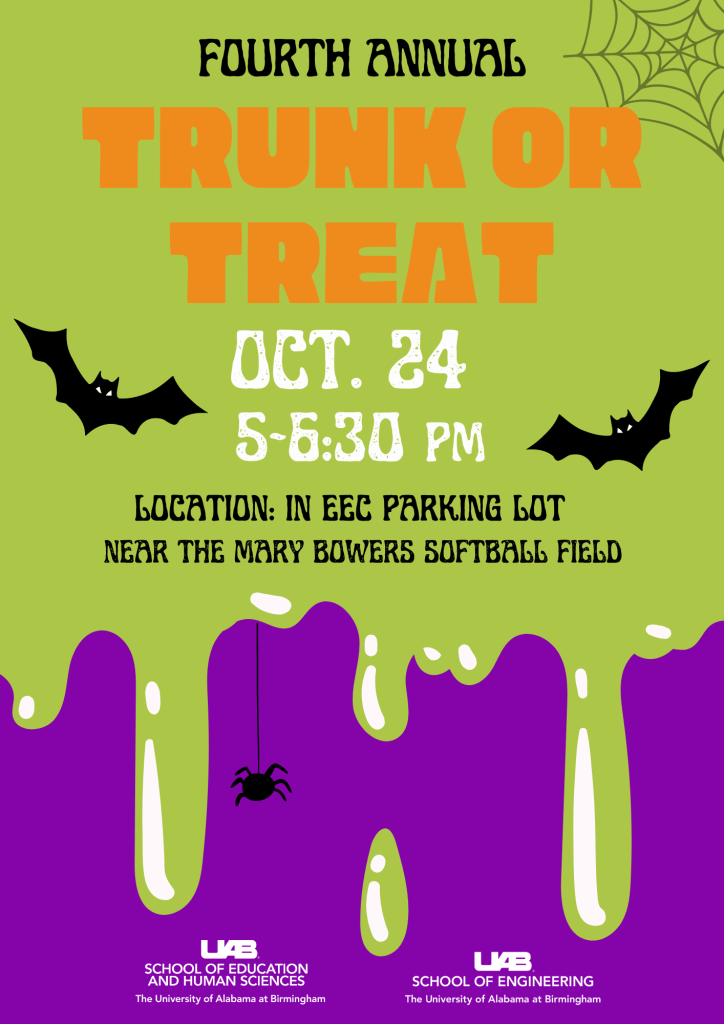
Please join the UAB Community Health & Human Services (CHHS) Program and have a good time ‘moving’ at the School of Education & Human Sciences “Trunk or Treat” event on Tuesday, October 24th (5:00pm – 6:30pm). The CHHS Program will provide the sounds that keep you ‘moving and grooving’ as you visit different trunks to get your treats. Come out and play corn hole, dance in streets, and get some candy. We will have a few items in support of overall student health and well-being. Check us out in the Education & Engineering Complex (EEC). See the flyer below.

Tips for Physical, Mental, & Emotional Well-Being

To learn more about National Health Education Week, please visit the Society for Public Health Education (SOPHE) website, here. To learn more about emotional wellness in the United States of America, please visit the Centers for Disease Control & Prevention (CDC) weblink, here. Regarding ones physical health, the CDC recommends the following, here.


Parents and schools can work together to improve adolescent mental health

By Travia Martin | UAB Community Health & Human Services Student

Photo by RDNE Stock project on Pexels.com

Although thought to be light and carefree, the adolescent years leading into adulthood are significant to the development of a child and their preparation into adulthood. From physical health, emotional health, mental health and other domains of wellness, these years are important as young people begin to take on adult like responsibilities. According to World Health Organization (n.d.), children ages 10-19 at some point may experience health issues related to the following poor hygiene, partaking in behaviors involving alcohol and drug use, unsafe sex, abuse, and teen pregnancy. While every area of health is important for the proper development of adolescents, mental health may be one of the categories often overlooked and underserved. For example, depression and anxiety have the most impact on this age group in relation to illness with suicide being the leading cause of death among those 15-19 (WHO, 2023). 1.1 million adolescents die each year, whether it be traffic accidents, violence, or self-inflicted harm.

School health programs should be championed and supported in middle and high schools to support adolescent development. Why? First, we should consider that in the U.S., fifty-six million students spend at least 6 hours a day at school, receiving social, physical, and intellectual development (CDC, 2021). Within your community, are you aware of the programs, activities, and group organizations that offer support to your middle and high school adolescence? Supplying mental health support and assistance within schools may elevate awareness, guidance and understanding of such complex health issues among adolescents. Additionally, social media plays a role in adolescent development, because young people see and do what they are taught or have learned, picked up through observational learning while constantly viewing social media on their electronic devices.

Whether you are a parent or an educator, there are several behaviors you can implement into your home, school, organization, etc. to help support and aid the development of adolescents and their mental health. Minor changes like spending more time engaging with young people through face-to-face conversation and allowing them to express their feelings mentally and emotionally, can aid positively to overall health and well-being (CDC, 2021). Removing teens and young adults from environments or locations that are toxic and filled with trauma to more peaceful and positive environments are also important. Supporting pro-social behaviors to express ones emotions such as art, writing, or even support groups involving peers of the same age is also important. Adolescent therapy and counseling are additional tools that can support the development of their mental health and create positive influence among their behaviors and actions (CDC, 2021).

What about you? Did you experience tough times during your adolescent years? What tips would you give to teenagers and young adults today? Leave a comment here or join the discussion at @WilkinsonWellnessLab on Facebook.

References:

Adolescent and young adult health. (n.d.). Www.who.int. https://www.who.int/news-room/fact-sheets/detail/adolescents-health-risks-and-solutions#:~:text=Depression%20and%20anxiety%20are%20among

CDC. (2021, April 23). Mental health of children and parents—A strong connection. Centers for Disease Control and Prevention. https://www.cdc.gov/childrensmentalhealth/features/mental-health-children-and-parents.html

COVID-19 Pandemic Associated with Worse Mental Health and Accelerated Brain Development in Adolescents. (2023, January 26). National Institute of Mental Health (NIMH). https://www.nimh.nih.gov/news/science-news/2023/covid-19-pandemic-associated-with-worse-mental-health-and-accelerated-brain-development-in-adolescents#:~:text=The%20two%20groups%20differed%20significantly

National Library of Medicine. (2022). CHILD AND ADOLESCENT MENTAL HEALTH. In http://www.ncbi.nlm.nih.gov. Agency for Healthcare Research and Quality (US). https://www.ncbi.nlm.nih.gov/books/NBK587174/

Why schools? | adolescent and school health | CDC. (2021, June 8). https://www.cdc.gov/healthyyouth/about/why_schools.htm


Reflecting on a tragic moment of civil rights history and feelings of yesterday

Larrell L. Wilkinson | Wilkinson Wellness Lab

Photo of window at the 16th Street Baptist Church and memorial plaque honoring the memory of the four young girls killed by the KKK bombing of the the church on September 15, 1963.

I knew yesterday was going to hit me hard. During the early weeks of September in Birmingham, AL, the annual commemorations begin. This year marks 60 years since the tragic death of four little girls and the injuries of several others, during the turbulent days of the Civil Rights movement. The City of Birmingham honored the victims of the bombing of the 16th Street Baptist Church on September 15, 1963, during the week of remembrance.

Working in the Birmingham area, I often drive past the historic markers of the Civil Rights movement. I can see the A.G. Gaston Motel, the 16th Street Baptist Church, Kelly Ingram Park, the Birmingham Civil Rights Institute and drive to Montgomery, AL to the Equal Justice Initiative & National Memorial, Dexter Ave. Church, the Rosa Parks Museum, and sacred sites of the movement. This year, 60 years after that fateful day of losing Addie Mae Collins, Denise McNair, Carole Robertson, & Cynthia Wesley, I know that America has made progress towards racial conciliation. I see it daily at my job, during worship occasions at my church, in visiting my children’s school, walking my neighborhood and patronizing businesses in my community. Still, exercising faith for a future that overcomes the actions of hatred manifested by individuals and groups that want to further efforts to separate us in the U.S., by race, by class, by the faith we practice, by any means that furthers their hate filled mission, that faith must be strong and resilient.

The actions of 60 years ago may seem like history to some but are very relevant to communities of people who have additional concerns when we go for a jog, shop at our community stores, or worship in our churches. Our families trade text messages to remind each other to “be safe”, “travel in groups”, “don’t travel at night”, “don’t get off the phone until you get home”, “don’t get gas at night”, “don’t stop at any stores tonight, we’ll order it later”, etc. Perhaps some if you are reading this, you might say, these sayings sound like useful tips. In contrast, others reading these words understand that these aren’t just tips, but necessary actions of life preservation for people feeling maliciously targeted due to their culture. For many, events that happened 60 years ago doesn’t feel like history, it feels like yesterday. Still, these groups of people press forward in hopes that their girls and boys will experience a society where the actions of a hateful few are no longer. Their hope is in a loving God, with the direction to love Him and to also love your neighbor as yourself (New International Version, Matt. 22: 34 – 40). It is in experiencing this form of solidarity that we can share in faith, hope, and love; love being the greatest of these (New International Version, Cor. 13:13).


Checking on others – It could save a life!

By Terrie Johnson | UAB Community Health & Human Services Intern

Photo by Designecologist on Pexels.com

When we go about our busy day by rushing to work, the store, meetings, church, and school, we never get the rest we need. Often, we overstretch the capabilities of our bodies to endure burnout. As such, we should ensure that we are okay as we go about our day and lead our lives. It is also relevant to take care of our physical and mental health. This stance is essential since it ensures that we are always to the best of our shape to handle daily activities. Moreover, as you go about your day, you should consider taking some of your time to check on your family and friends. This caring approach allows you to know how they are doing with life. You may ask; how are you doing? In some cases, you can make a phone call. This initiative can help them to relieve some stress in their life. In other words, simply talking to them about what is stressing them may restore their emotional and psychological well-being.

It is also important to listen to your loved ones or offer a suggestion to help them relieve their stress. Often, you could state recommendations they never thought about during their stressful moment. You may even offer to accompany them on a walk or go grab a coffee together. Thus, your initiative will work toward restoring their perspectives about challenges and desirably handling them. You can also be involved in helping individuals judge good from bad. In most cases, it may be hard for some people to differentiate situations. As such, helping a person judge emotion provides an impetus for self-correction. It also creates an impetus for recognizing harmful emotions so that they can be avoided (Health Shots, 2023). Other than this, the initiative can create leverage for improved understanding of interventions to emotional challenges. Thus, it is relevant to help others deal with issues that affect their health.

Reference

Health Shots. (2023). Your emotions always have something to say! That’s why listen to them very carefully. Healthshots.com. Retrieved from https://www.healthshots.com/mind/emotional-health/emotional-health-why-is-it-important-to-listen-to-your-emotions/


Light of the World: Bringing Mental Health to Life, LLC

By Jessica Feagin | UAB Community Health and Human Services Intern

Photo by Madison Inouye on Pexels.com

This weekend, I had the pleasure of meeting up with Chief executive officer and mental health professional, Xavian Tate. Mr. Tate founded Light of the World LLC. He is driven to make a difference in people’s lives with the ultimate goal of empowering people and impacting mental well-being. The scripture inspired the name of his organization and firm, Matthew 5:16, “Let your light shine before men, in such a way that they may see your good works and glorify your Father which is in heaven.”

Light of the World: Bringing Mental Health to Life is a mental health consulting firm that offers many services, such as:

  • Life and peer coaching- Individual coaching (life coaching) is a collaborative process through which clients work one-on-one with a trained mental health coach in a safe environment to achieve professional and personal goals.
  • Cleaning therapy-Say goodbye to clutter and stress as their cleaning therapists create an organized and clean space to promote mental clarity and emotional well-being.
  • Financial therapy-A team is provided to work with people to assist with securing a healthy and proper financial future.
  • Travel therapy-Professionals work with individuals who need a mental health break.

To book these services and learn more about this firm, visit their website at lwicorp.org


The Unsung Hero of Self Care : Get Your ZZZzzzzz’s!

Angela R. Wilson | UAB Community Health & Human Services Intern

Photo by Rachel Claire on Pexels.com

Seems like everyone has a busy life these days.  Some adults work two jobs and have children participating in sports, band, or other extracurricular activities. We are constantly on the go with our hectic schedules, and we rely on our bodies to continue to function properly amidst our many physician demands. One of the most important things we can do for our bodies is to ensure that we get enough sleep.  The significance of sleep is often underrated and not thought of as a necessity. But not getting enough sleep can have detrimental consequences. 

Quality sleep improves your health, mood, and brain performance. It can also help you avoid certain diseases and disorders.  Getting the proper amount of sleep can reduce your chances of getting heart disease, stroke, obesity, high blood pressure, dementia, and diabetes. According to News in Health, healthy sleep consists of three things; how much sleep you get, sleep quality, and consistent sleep. (Bryant & Reynolds, 2022). Just because you are sleeping does not mean that your brain is sleeping too. As a matter of fact, just the opposite is true.  Your brain is constantly working during the time that you are sleeping and is preparing your brain to create, learn, and remember.  Sleep also allows your blood vessels, immune systems, and other metabolic processes to repair. Without proper sleep, these processes will be disturbed, and the body does not reset. Experts recommend that school-age children get at least nine hours of sleep per night. Teenagers should get at least eight to ten hours a night, and most adults should get at least seven or more hours of sleep per night. 

If you are having trouble getting to sleep at night, try making small changes in your sleep routine.  Doing things like lowering your thermostat and cutting off all electronic devices like cell phones, computers, and televisions can facilitate a quiet, peaceful place free of distractions. Going to sleep and waking up at the same time every night can help your internal clock maintain a regular schedule. Avoid taking naps throughout the day so that your body is fully prepared to rest when you finally call it a day.  Avoid caffeine, chocolate, beverages, and energy drinks after lunch due to their ability to stimulate alertness. Try visualizing things that make you happy or reading from a traditional paper book, (not an e-book). And lastly, talk to your doctor about using sleep enhancing supplements like melatonin, magnesium, or 5-HTP, (an amino acid that boosts serotonin production).

Hopefully, you will find a viable solution to help you get the proper amount of sleep you need, and the saying, “out like a light” will be your new reality.  Good night!

 References

Bryant, E., & Reynolds, S. (2022, July 15). Good sleep for good health. National Institutes of Health. https://newsinhealth.nih.gov/2021/04/good-sleep-good-health

Dasgupta, R. and Semeco, A. (2023). Healthline. 20 Tips That Help You Fall Asleep Quickly. https://www.healthline.com.


Good Sleep Matters!

By Jessica Feagin, Intern and UAB Community Health and Human Services Student

Photo by Andrea Piacquadio on Pexels.com

Getting proper and sound sleep is essential for everyone. It improves your health, brain performance, and mood. Not getting regularly appropriate and good sleep can increase the risk of many disorders, including stroke and heart disease, dementia, and obesity. We need quality sleep because sleep helps the brain prepare to learn, create, and remember (NIH, 2022).

When you’re sleeping, essential tasks that benefit your physical health by your body and brain are performed. For example, your immune system releases proteins called cytokines, which defend against inflammation and illnesses. When you’re sick, these proteins increase in your body; however, when you’re sleep-deprived, the production of cytokines may dip, making you more vulnerable to viruses and colds. Good sleep is also beneficial for your heart. When you sleep, your heart rate and blood pressure decrease, allowing your cardiovascular system to slow down (Juli Fraga, 2022)

As a woman, we have heard about “getting your beauty rest.” Good sleep benefits your skin. When you’re asleep, collagen is produced, a protein that prevents wrinkles and repairs the skin. Conversely, insufficient sleep can produce cortisol, making your eyes red and puffy and causing skin flare-ups (Juli Fraga, 2022).

The Centers for Disease Control and Prevention (CDC) recommends that adults ages 18-60 get seven or more hours of sleep per night. Tips provided by the CDC (2022) for better sleep are to:

  • Be consistent by going to bed at the same time at night and waking up at the same time each morning
  • Make sure your bedroom is relaxing, dark, quiet, and at a comfortable temperature
  • Remove all electronic devices from the bedroom
  • Avoid alcohol, large meals, and caffeine before bed
  • Exercise during the day to help you fall asleep more easily at night

Lack of proper sleep can impact your body in many ways. What tips do you have for those struggling to get a good night’s sleep?

References

Centers for Disease Control and Prevention. (2022b, September 13). Tips for better sleep. Centers for Disease Control and Prevention. https://www.cdc.gov/sleep/about_sleep/sleep_hygiene.html

Juli Fraga, Psy. D. (2022, February 25). Why sleep matters more than ever. Sleep.com. https://www.sleep.com/sleep-health/why-sleep-matters-more-than-ever

U.S. Department of Health and Human Services. (2022, July 15). Good sleep for good health. National Institutes of Health. https://newsinhealth.nih.gov/2021/04/good-sleep-good-health


What is Shame and How Does It Affect Us?

By LaTangellia Walker | Community Health and Human Services Intern

Photo by Liza Summer on Pexels.com

Shame is a painful, self-critical emotion; A feeling of humiliation or distress caused by the consciousness of wrong or foolish behavior. When we feel shame, it is common to think of ourselves in a negative light. We begin to think that we are ugly, incompetent, or stupid (The psychology of shame, 2023). The moment we begin having these thoughts, we separate our true selves with an ideal image of who we aspire to be. Our ideal image is usually represented by a strong figure, not someone who drowns themselves in self-pity.

Shame is associated with many mental health disorders. The most common mental health disorder that shame is correlated with is suicide, which is often seen as a motive for suicidal behavior. In 2021, 47,646 people died by suicide (CDC, 2022). Suicide rates have been skyrocketing for years and there is evidence that social factors such as loniless, financial ruin and shame are more direct causes of this dramatic increase.

The most common questions we are asked in the United States are “What do you do?” or “Are you seeing anyone?” or “When are you going to have kids?” Oftentimes, when we are being asked these questions, we judge ourselves before anyone else gets a chance to. But what would happen if we let others judge us without judging ourselves? When we leave this world, we aren’t going to care what people say about us. 

So how can we learn let go of our shamefulness?

  • Admit when you feel shame and explore why.
  • Talk to someone you trust about what you are feeling.
  • Find compassion for yourself.
  • Remember that your opinion of yourself matters the most!

 We do not feel ashamed because of our actions, but because of who we are (The psychology of shame, 2023).

Centers for Disease Control and Prevention. (2022, September 30). Suicide increases in 2021 after two years of decline. Centers for Disease Control and Prevention. Retrieved March 9, 2023, from https://www.cdc.gov/nchs/pressroom/nchs_press_releases/2022/20220930.htm 

Sussex Publishers. (n.d.). The psychology of shame. Psychology Today. Retrieved March 9, 2023, from https://www.psychologytoday.com/us/blog/sonnet-freud/202009/the-psychology-shame