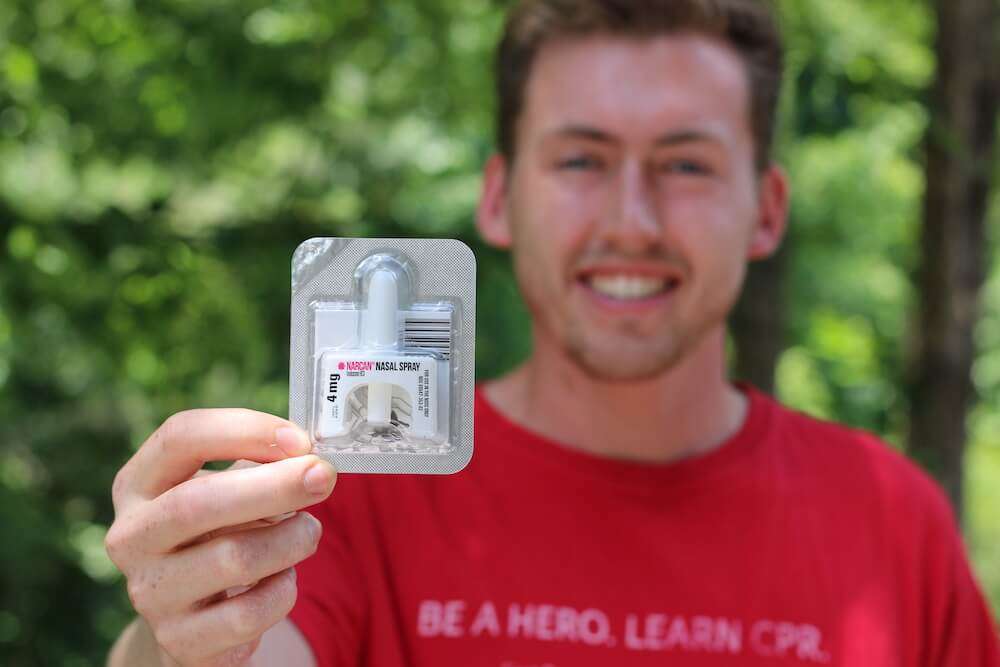
Not All Heroes Wear Capes, But They Do Carry Narcan

Image sourced from https://www.firstresponsecpr.com/blog/opioid-overdose-first-aid/

If someone you know and love takes opioids or uses drugs, you can save their life in the event of an overdose by having one simple product from your local pharmacy. Narcan is a drug that can reverse the symptoms of an opioid overdose. You may also see this drug referred to as Noloxone. This can be given through either a nasal spray or a muscle injection.

Before giving someone Narcan, it is important to know if the person who needs help is having an opioid overdose. According to the Centers for Disease Control and Prevention, there are a few signs that can show if someone is overdosing.

  • They are unconscious and will not wake up
  • Their skin, nails, or lips are discolored
  • They have slow or shallow breathing
  • They are making choking or gurgling noises while unconscious
  • They have small pupils that do not react to light

Only certain substances can cause an opioid overdose, including heroin, prescription or non-prescription opioid medications, fentanyl, and other drugs that may be mixed with fentanyl like cocaine or methamphetamine. If someone is overdosing on a drug that is not an opioid, Narcan will not harm that person, but it will not have any overdose reversal effects.

The first step to giving Narcan to someone who is overdosing is to call 911. While Narcan can help with overdose symptoms, this is not a cure, and medical professionals will need to give aid to the person who has overdosed. After giving someone Narcan, their breathing should become deeper within 2 to 3 minutes. If their breathing does not deepen after this time frame, you can administer a second dose.

After someone is given Narcan and while waiting for medical professionals to arrive, they should be turned onto their side, kept awake, and someone must stay with them until help arrives.

If you or someone you love is using an opioid, you don’t have to worry about not being able to help them if they overdose. You can be an everyday hero with Narcan!


This post has referenced content from the following sources:

CDC. (2024, May 2). 5 things to know about naloxone. Centers for Disease Control and Prevention. https://www.cdc.gov/overdose-prevention/reversing-overdose/about-naloxone.html

Enser, M. (2023, June 2). Opioid overdose symptoms, first aid, resources, & free narcan. First Response Safety Training. https://www.firstresponsecpr.com/blog/opioid-overdose-first-aid/


Addressing substance misuse among young people: Supporting brighter futures

By Haleigh Horton | UAB Community Health & Human Services Program Student

Photo by cottonbro studio on Pexels.com

Substance use among teenagers and adults is a serious public health issue that affects an individual’s health as well as the health of their families and communities. In 2022, an estimated 48.7 million individuals twelve and older had a substance use disorder, including 29.5 million experiencing alcohol use disorder (AUD) and 27.2 million experiencing drug use disorder (DUD), according to the Substance Abuse & Mental Health Services Administration (SAMHSA). Teenagers and young adults may be particularly susceptible to the influence of drugs due to a variety of social, economic, and environmental factors (Morin, 2022). As a result of teenage and young adult substance abuse, it is important for society to promote healthy behaviors among youth, it is essential to implement preventive measures and interventions to combat the health and social issue.

According to the CDC (2022), young people may be at risk for substance use if experiencing risk factors like:

  • Family history of substance use
  • Favorable parental attitudes towards the behavior
  • Poor parental monitoring
  • Parental substance use
  • Family rejection of sexual orientation or gender identity
  • Association with delinquent or substance using peers
  • Lack of school connectedness
  • Low academic achievement
  • Childhood sexual abuse
  • Mental health issues

School-based preventive programs should be encouraged in our nation’s middle and high schools. These programs may promote positive peer relationships and effective decision-making, while educating them about the risks and consequences of substance abuse. Moreover, students can develop resilience and coping skills needed to navigate adolescence and resist substance abuse by incorporating social-emotional learning elements, such as empathy and self-awareness (ICF, 2022). It is also important for communities to provide support and resources for teenagers and their families by engaging local community organizations, religious institutions, and local leaders in an effort to create awareness about teenage drug use, as well as provide support and resources for those too (ICF, 2022). Counseling services, peer support groups, and recreational activities are also needed supports to address drug use among teenager and young adults (SAMHSA, 2023). Effective strategies to prevent drug use among young individuals is critical to ensuring the well-being of our communities.

We can help teenagers and young adults have a healthier future by implementing evidence-based prevention programs, creating supportive environments, and providing them with essential skills and resources. Advocacy and community involvement are essential to overcoming substance abuse challenges and fostering positive outcomes for future generations. So what do you think? Have you benefited from programming in schools? In college? Share here and on our Facebook page @Phame.US.Impact.

References:

Drug-free communities program successes | drug overdose | CDC injury center. (2023, October 23). https://www.cdc.gov/drugoverdose/drug-free-communities/program-success.html

HHS SAMSHA release 2022 national survey on drug use and health data. (2023, November 13). https://www.samhsa.gov/newsroom/press-announcements/20231113/hhs-samhsa-release-2022-nsduh-data

High risk substance use in youth | adolescent and school health | CDC. (2023, March 24). https://www.cdc.gov/healthyyouth/substance-use/index.htm

ICF (2022). Drug-Free Communities (DFC) Support Program National Cross-Site Evaluation: End-of-Year 2022 Report. Washington, DC: Office of National Drug Control Policy.

Morin, A. (2022, January 9). Is your teen using drugs? look for these warning signs. Verywell Family. https://www.verywellfamily.com/teen-drug-use-
warning-signs-2606192