DOING SELF-CARE & BEING WELL: JOIN CONVERSATIONS WITH KHALIA EVERY FOUTH MONDAY

By: Flora Johnson, Intern
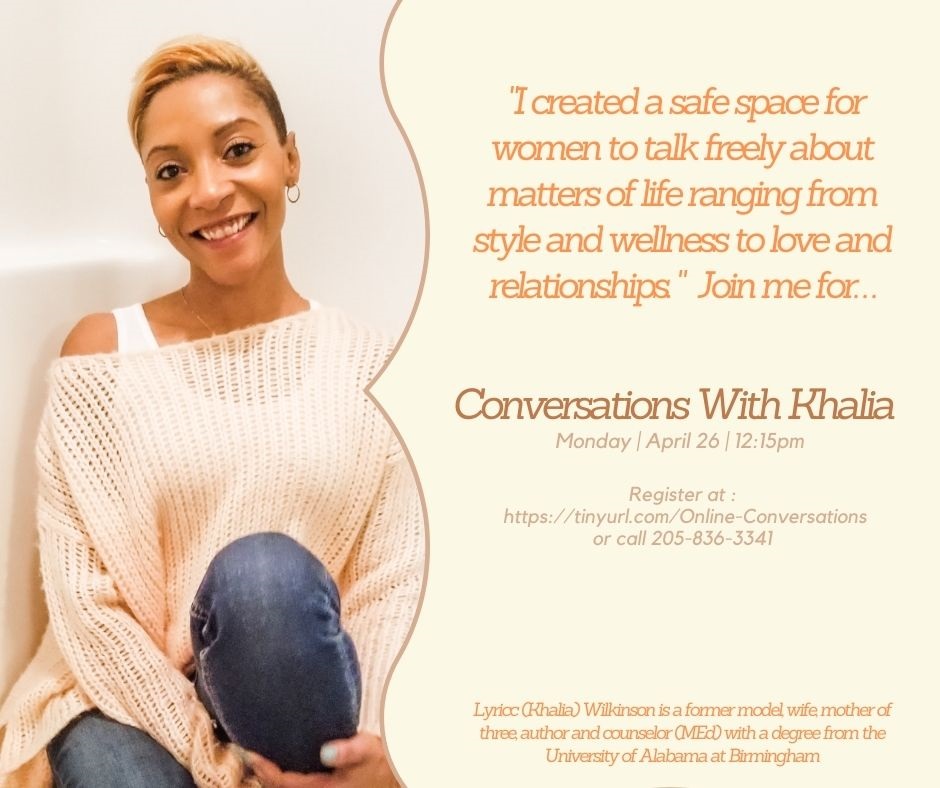
FLYER FROM EAST LAKE LIBRARY OF THE BIRMINGHAM PUBLIC LIBRARY SYSTEM

“What is missing is fun. We need to unplug and do something fun! It may sound cheesy, but having fun is self-care.” – Khalia Wilkinson

Are you ready to live well, be healthy, and walk into abundant life?  Conversations with Khalia is a platform designed for women to speak freely about matters of life. Conversations with Khalia is a virtual talk on women’s wellness hosted through the East Lake Branch of the Birmingham Library every fourth Monday of the month. Mrs. Khalia Wilkinson is a coach and minister working with women looking to ditch feeling stressed, overwhelmed, drained, and desiring to be accomplished, healthy, and thriving.  On April 26, 2021, she will host an online conversation at 12:15PM CST. You can register here (https://tinyurl.com/Online-Conversations) or call (205) 836-3341 to attend.

Khalia Wilkinson is a counselor and wellness coach with 15 years of experience mentoring and training women. She has written The Women’s COVID-19 Survival Guide to uplift women experiencing wellness withdrawals due to the sudden shifts in their schedules caused by the COVID-19 pandemic. The guide discusses in-depth how to navigate the required activities of daily living in this new unforeseen space while managing isolation, mental wellness, schedules, and self-care. She also hosts the Woman31 Podcast, a podcast rooted in biblical principles found in Proverbs, Chapter 31 with an accompanying website: Woman31.

Khalia believes that a woman’s health and well-being is foundational to ensuring all other scheduled family activities are successfully completed. The Women’s COVID-19 Survival Guide embraces concepts of self-care in support of one’s overall health and wellness.  The guide offers easy-to-perform tasks that can help individuals better manage their well-being.

Self-care is typically visualized as a spa day. However, Khalia suggests that adequate sleep, eating a healthy and satisfying meal, praying, laughing at a good movie, and/or speaking with a trusted and supportive friend are all excellent modes of self-care. Understanding where you are and what health areas you need to focus on is pivotal to living well.

Khalia says that mental health is vital to overall wellness. She suggested that seeking professional counseling is absolutely a “good thing” to do, especially when one is experiencing serious mental illness. She also mentioned that feeling negative emotions is a signal to our body that something is not “okay.” Thus, it is important to listen to our body and seek help. When asked if there was any wellness advice she could offer, she said, “Do something fun and find ways to get back to the activities we love, because it can be healthy for our bodies.” You can always connect with Mrs. Khalia Wilkinson on Instagram, @khalia.woman31.
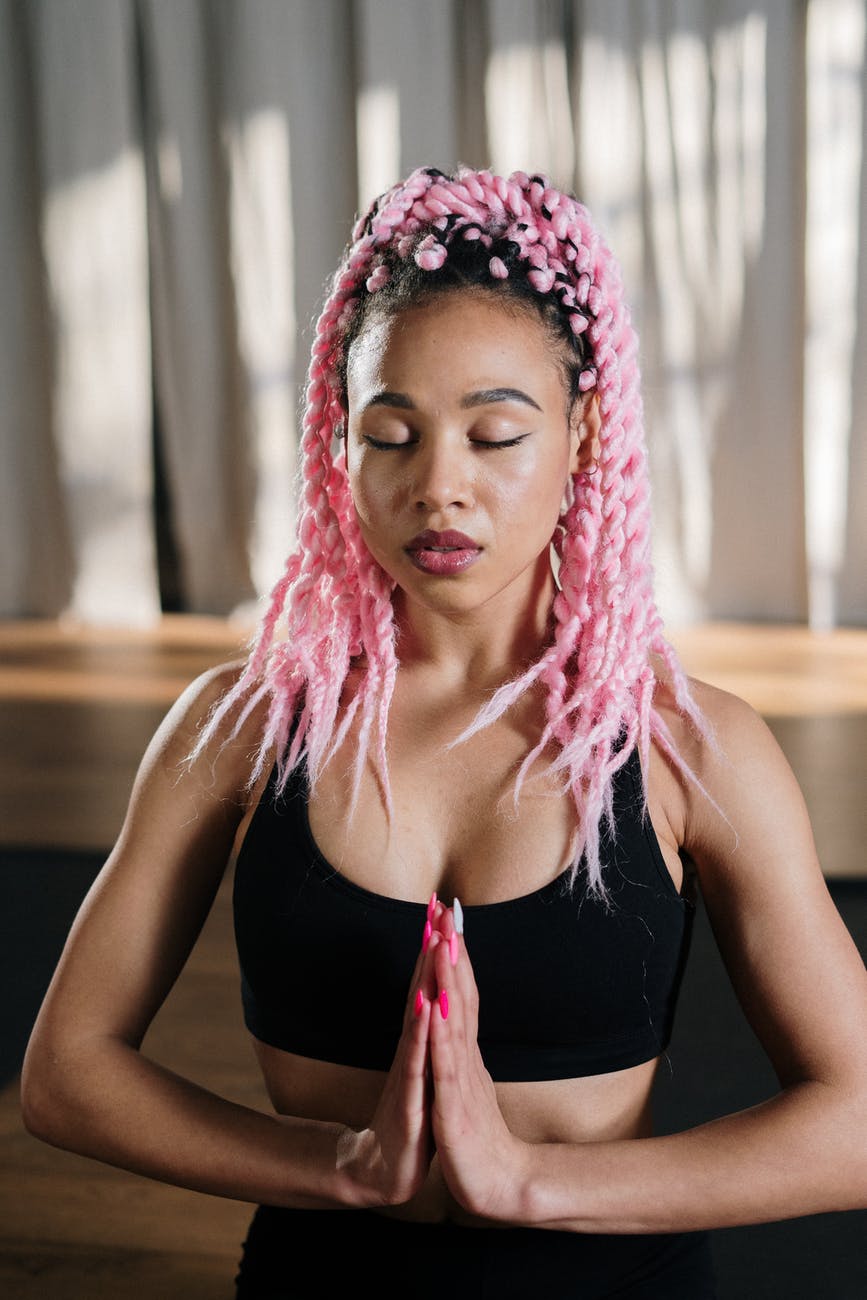

WOMEN, BE SMART ABOUT YOUR HEART!

By Shayna Bryan (UAB Community Health & Human Services Intern) and Dr. Larrell L. Wilkinson

Photo by cottonbro on Pexels.com

Every February since 1964, Americans have celebrated American Heart Month! Why? According to the CDC, heart disease is the leading cause of death among American adults and most ethnic/racial groups. Heart disease the body’s circulatory system, i.e. your veins and arteries. There are several forms of heart disease, but some of the most common include heart attack and coronary artery disease. According to the American Heart Association , a heart attack occurs when blood flow to the heart is interrupted, thus the oxygen supply to the heart muscle is reduced or completely cut off. This is important because the CDC estimates that 805,000 heart attacks occur annually in the United States.

Among Americans, non-Hispanic Black (African Americans) are at great risk for heart disease. The American Heart Association reports that about half of African-American women over the age of 20 have some form of heart disease, yet only about 1 out of 3 know their heart health risk. Around 50,000 African-American women die from cardiovascular disease annually. But we can prevent the deaths and reduce the number of our families impacted by heart disease. Here is what we can do:

Step 1: Learn your risk for heart disease.

Visit your doctor and ask for diagnostic tests for coronary heart disease. If you don’t have a personal physician or access to health care, contact Jefferson County Department of Health or your local county health department for assistance.

In general, any individual who has been diagnosed with any of these conditions is at risk for heart disease:

• Overweight or obesity
• High blood pressure
• Diabetes
• Physical inactivity
• Family history (first degree relative, such as a parent or sibling, who has had a heart attack or stroke before age 50)

Step 2: Work to reduce your risk of heart disease.

Photo by Laura James on Pexels.com

Eat healthy
Add more fruits and vegetables to your diet. Five servings a day is the recommended minimum, so aim even higher by making vegetables half of your meal. Lower your sodium intake by eating more home cooked meals, instead of fast food. Drink water, not soda or juice which is high in added sugars.

Be active
Aim for 150 minutes of physical activity every week. That’s only around 20 minutes a day. You can make walking part of your routine. Try going for a walk and talking to a friend on the phone. Any activity that elevates your heart rate will improve your health and help lower your risk.

Manage stress
Stress management is important for heart health. Eating healthy and staying active can help keep your stress levels down. Learn what triggers your stress and address it by slowing down and engaging in meditation or breathing exercises.

Step 3: Always look for the signs of a heart attack

According to the American Heart Association, women are somewhat less likely than men to experience chest pain. Instead, they are more likely to experience:

  • Dizziness
  • Fatigue
  • Nausea
  • Pressure or tightness in the chest
  • Stomach pain

To learn more about heart disease in women, please click on the links above. Additional resources include the following links:

https://www.goredforwomen.org/en/about-heart-disease-in-women/signs-and-symptoms-in-women/symptoms-of-a-heart-attack

https://www.heart.org/en/health-topics/consumer-healthcare/what-is-cardiovascular-disease/african-americans-and-heart-disease-stroke

https://www.heart.org/-/media/phd-files-2/science-news/2/2021-heart-and-stroke-stat-update/2021_stat_update_factsheet_black_race_and_cvd.pdf?la=en

https://www.heart.org/en/healthy-living/healthy-lifestyle/stress-management/stress-and-heart-health