Why Early Screening for Autism Is Essential in Underserved Communities

by Tiana Lopez | UAB Community Health and Human Services Program (Student)
Photo by KATRIN BOLOVTSOVA on Pexels.com

Every parent wants the best for their child. But for many families in Alabama, getting an autism diagnosis can be harder than it should be. Research shows that Black children are often diagnosed with autism two to three years later than white children, despite showing symptoms at the same age (Mandell et al., 2009). These delays result in missed opportunities for early intervention. This support can drastically improve a child’s ability to communicate, learn, and thrive.

In Alabama, especially in rural or underserved communities, parents face multiple barriers to getting a timely diagnosis. Some are unfamiliar with early autism signs such as poor eye contact, delayed speech, repetitive behaviors, or lack of social interest (Centers for Disease Control and Prevention [CDC], 2023). Others may be discouraged from seeking help, told to “wait and see,” or lack access to a qualified specialist. Even when parents do recognize the signs, they often encounter long waitlists, high costs, or too few autism-focused providers in their area. These obstacles can feel overwhelming (Constantino et al., 2020). One researcher noted, “Autism spectrum disorder remains underdiagnosed in minority populations, despite evidence of comparable symptom presentation” (Constantino et al., 2020, p. 3). This highlights that the problem is not rooted in the children themselves but in systemic inequities.

Early Intervention Makes a Difference
The earlier autism is identified, the earlier a child can begin receiving services that build critical skills. Studies confirm that early intervention, ideally before the age of three, leads to improved language, social, and behavioral outcomes (Zwaigenbaum et al., 2015). That is why early screening is essential, particularly for families in underserved communities where systemic barriers are more common.

Practical Steps for Families
If you are a parent or caregiver of a young child in Alabama, here are two steps you can take right now:

  • Ask your child’s pediatrician about developmental and autism screening. These can be done during regular checkups starting at 18 months.
  • Reach out to Alabama’s Early Intervention System. This program offers free evaluations and services for children under three. A doctor’s referral is not required to get started (Alabama Department of Rehabilitation Services, 2023).

Getting a diagnosis should not depend on race/ethnicity, income, or ZIP code. With awareness, persistence, and support, families can overcome barriers and get their children the help they deserve. Equity in healthcare begins with timely diagnosis and access to resources for every child. To advocate for more autism resources in your community, you can join and support local and national organizations like the Autism Society and the Autistic Self Advocacy Network (ASAN), attend and volunteer at community events, and share your story on social media. If you like, please consider sharing your experience with the Wilkinson Wellness Lab on Facebook.

References
Alabama Department of Rehabilitation Services. (2023). Early Intervention Program. https://rehab.alabama.gov/individuals-and-families/early-intervention

Centers for Disease Control and Prevention. (2023). Data and statistics on autism spectrum disorder. https://www.cdc.gov/ncbddd/autism/data.html

Constantino, J. N., Abbacchi, A. M., Saulnier, C., Klaiman, C., Mandell, D. S., Zhang, Y., … & Molholm, S. (2020). Timing of the diagnosis of autism in African American children. Pediatrics, 146(3), e20193629. https://doi.org/10.1542/peds.2019-3629

Mandell, D. S., Wiggins, L. D., Carpenter, L. A., Daniels, J., DiGuiseppi, C., Durkin, M. S., … & Kirby, R. S. (2009). Racial/ethnic disparities in the identification of children with autism spectrum disorders. American Journal of Public Health, 99(3), 493–498. https://doi.org/10.2105/AJPH.2007.131243

Zwaigenbaum, L., Bauman, M. L., Choueiri, R., Kasari, C., Carter, A., Granpeesheh, D., … & Pierce, K. (2015). Early intervention for children with autism spectrum disorder under 3 years of age: Recommendations for practice and research. Pediatrics, 136(Supplement_1), S60–S81. https://doi.org/10.1542/peds.2014-3667E


Toastmasters: Bridging the Digital Divide with Communication

by Evan Hudson | UAB Community Health and Human Services Program (Student)

Photo by Henri Mathieu-Saint-Laurent on Pexels.com

How has campus life been since the pandemic? Are you happy to see your peers again and enjoy in-person activities, or have you struggled to reconnect? You’re not alone – many students are dealing with increased anxiety, low self-esteem, and lack of motivation to engage socially and academically (Acosta-Gonzaga, 2023; Hu et al., 2022). COVID-19 pushed digital communication forward, but many now find in-person interactions more difficult. How can we get back to the basics and talk to each other again?

Research in second language acquisition shows that language “output” (speaking, writing, typing) can boost confidence (Muhajir & Sri Redjeki, 2018). Public speaking, often ranked as a top fear, is one way to promote this. You may not be learning a second language, but what if you could join a supportive community to practice and improve your speaking skills?

A Comfortable Place to Practice Speaking Skills
Toastmasters International is a global public speaking club, and its University of Alabama at Birmingham (UAB) chapter is growing fast. The club helps you build confidence in communication through a stress-free environment. We work on everything from body language to eye contact, with personalized learning “Pathways” that focus on your needs. We often tell our members that “half of life if how you talk to people,” and we know that if you can speak to an audience, you can speak to an individual. Public speaking can help you become more comfortable with meetings, job interviews, and many other in person or digital interactions.

“Toastmasters helped me prepare for presentations in my graduate program. Those skills carried over into my professional career, and I present almost every week”Former Graduate Student

Toastmasters at UAB can allow for one to grow professionally and connect with like-minded individuals from around the world. Plus, the confidence one can build in Toastmasters can carry over to conversations with friends, peers, and family. Visitors are welcome to attend meetings for free. We meet at UAB’s Bevill Biomedical Research Building (Room 170) on the 2nd and 4th Tuesdays at 5:30 PM, and hold a hybrid meeting on the 3rd Monday of each month. To learn more about Toastmasters at UAB, please visit uab.toastmastersclubs.org. I hope to see you there!

References
Acosta-Gonzaga, E. (2023). The effects of self-esteem and academic engagement on university students’ performance. Behavioral Sciences, 13(4), 348. https://doi.org/10.3390/bs13040348

Hu, K., Godfrey, K., Ren, Q., Wang, S., Yang, X., & Li, Q. (2022). The impact of the COVID-19 pandemic on college students in USA: Two years later. Psychiatry Research, 315, 114685. https://doi.org/10.1016/j.psychres.2022.114685

Ibrahim, I. W., & Shahabani, N. S. (2020). THE USE OF PUBLIC SPEAKING TO PROMOTE CONFIDENCE IN LEARNING ENGLISH AS A SECOND LANGUAGE. European Journal of English Language Teaching, 6(1).

Muhajir, R., & Sri Redjeki, I. (2018). Public speaking activities to improve students’ speaking skills. ENGLISH JOURNAL, 12(1), 39. https://doi.org/10.32832/english.v12i1.3769 Wang, Y., & Liu, J. (2024). The impact of COVID-19 on international students: A qualitative synthesis. British Journal of Educational Studies, 72(6), 805–829. https://doi.org/10.1080/00071005.2024.2374077


Restful sleep supports reduced stress. Let’s try it for ourselves

By the Wilkinson Wellness Lab

Are we trying to stay up so we can cram for the test? Perhaps we hung out too late and now we are feeling it in the morning. Maybe we drank to much Starbucks and we want to go to sleep, but just can’t. Or perhaps, we are a little worried about the paper that needs to be written and it is haunting us…no sleep. Either way, are sleep is impacted, which is still detrimental to our ability to cope with stress and support our mental health.

According to a study by Scott et al. (2021), improving sleep quality leads to better mental health. Other organizations like the Centers for Disease Control and Prevention (CDC) and the Sleep Foundation, also suggest the connection is relevant and asserts the connection to how we handle stress. Thusly, to improve mental health and stress management, it is a good idea to practice a sleep routine. A sleep routine is a a set of activities you do before bed each night to help you fall asleep. Some steps to include in creating your sleep routine may involve:

Setting a consistent sleep schedule: Go to bed and wake up at the same time every day, even on weekends to support your body’s rhythm.

Create a relaxing bedtime routine: Engage in calming activities before bed. Activities may include reading, warm baths, deep breathing exercises and meditation.

Create a calming sleep environment: Ensure your bedroom is cool, dark, and quiet. If needed, invest in an eye cover or ear plugs to limit noise and intrusions.

Limit exposure to screen: Reduce blue light exposure from phones, tablets, and computers at least an hour before bedtime.

Monitor your diet before bed: Avoid large meals, caffeine, and alcohol close to bedtime. These can disrupt your sleep cycle.

Be active during the day: Regular physical activity can help you fall asleep faster and enjoy deeper sleep. But try not to work-out close to bedtime.

Stress management: Techniques like placing your thoughts out of your head and elsewhere (i.e., journaling), yoga, and mindfulness can help reduce stress prior to your bedtime.

Have you tried these techniques above? If so, how did you do it? If not, what is hindering you from trying? Perhaps you tried, but when times became stressful, so stop working to solidify your routine. What next steps do you suggest? Please share your thoughts in the comment section and or visit us on Facebook @WilkinsonWellnessLab.


UAB Community Health & Human Services Program sponsors National Health Education Week 2024

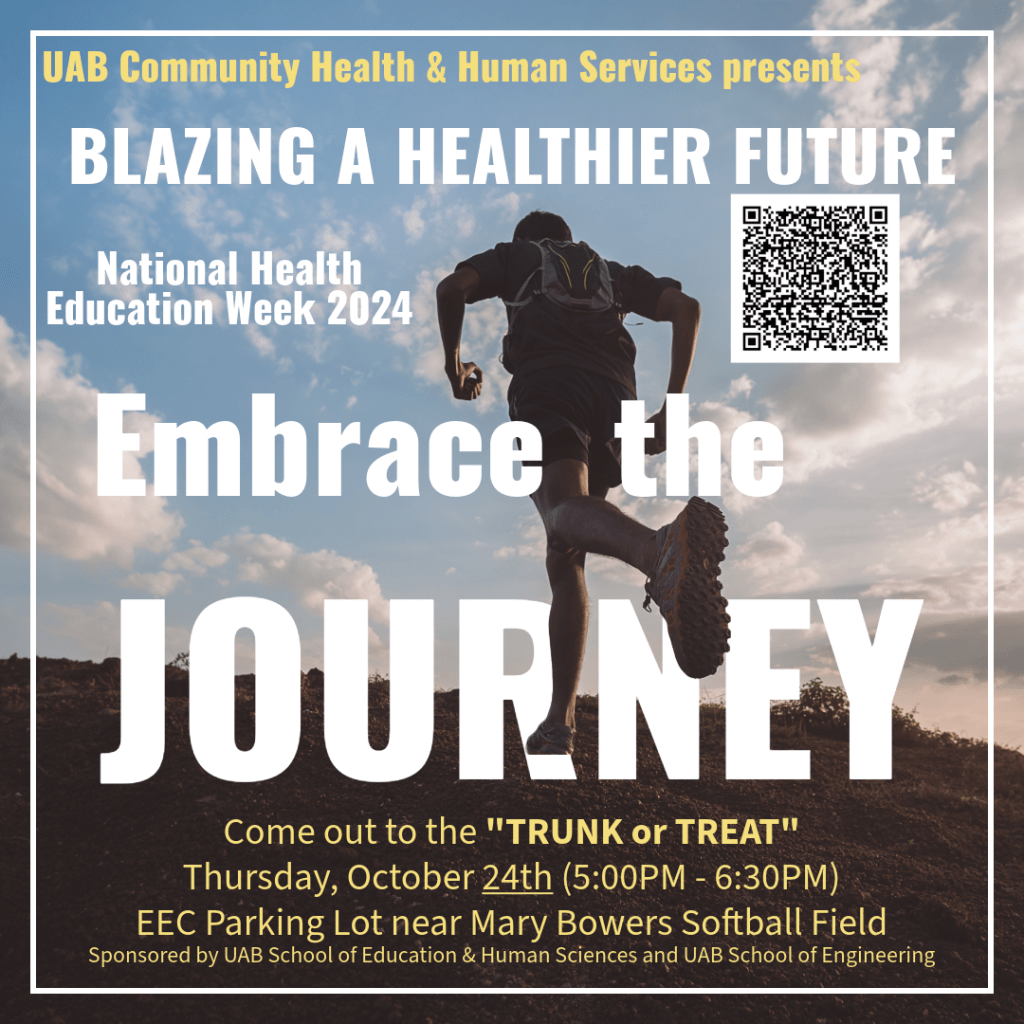
Please join the UAB Community Health & Human Services (CHHS) Program at our mental health and wellness outreach table on Tuesday, October 22nd (10am – 1pm). We will have a few items in support of overall student health and well-being, while also equipping ourselves with mental wellness techniques to exercise through the remainder of the semester. Check us out in the Education & Engineering Complex (EEC). See the flyer below.

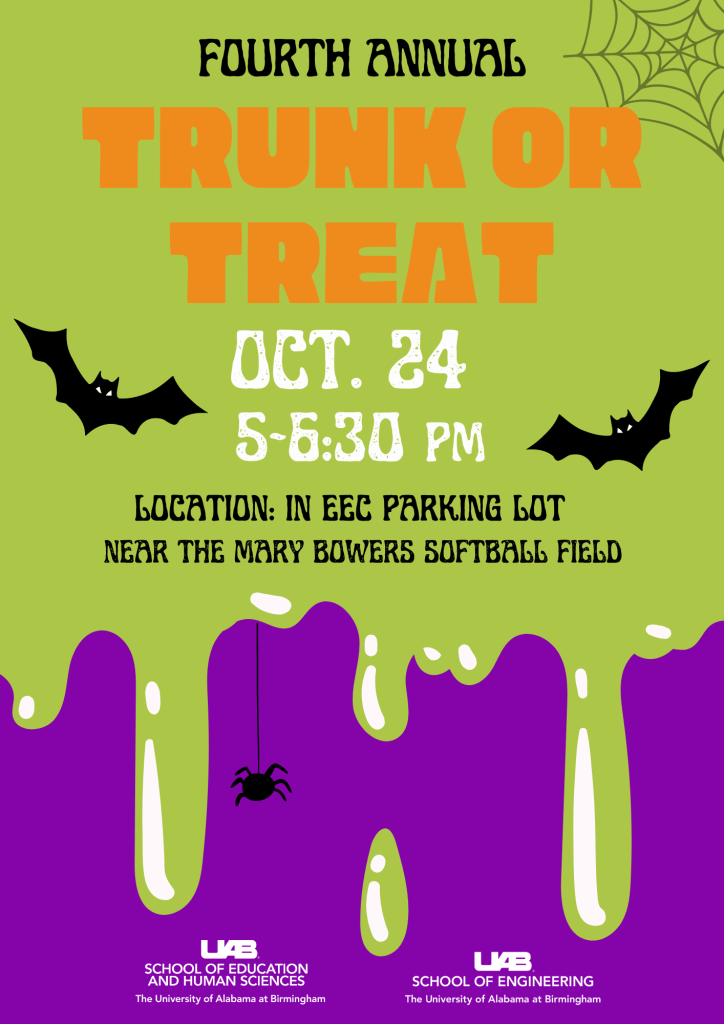
Please join the UAB Community Health & Human Services (CHHS) Program and have a good time ‘moving’ at the School of Education & Human Sciences “Trunk or Treat” event on Tuesday, October 24th (5:00pm – 6:30pm). The CHHS Program will provide the sounds that keep you ‘moving and grooving’ as you visit different trunks to get your treats. Come out and play corn hole, dance in streets, and get some candy. We will have a few items in support of overall student health and well-being. Check us out in the Education & Engineering Complex (EEC). See the flyer below.

Tips for Physical, Mental, & Emotional Well-Being

To learn more about National Health Education Week, please visit the Society for Public Health Education (SOPHE) website, here. To learn more about emotional wellness in the United States of America, please visit the Centers for Disease Control & Prevention (CDC) weblink, here. Regarding ones physical health, the CDC recommends the following, here.


The Unsung Hero of Self Care : Get Your ZZZzzzzz’s!

Angela R. Wilson | UAB Community Health & Human Services Intern

Photo by Rachel Claire on Pexels.com

Seems like everyone has a busy life these days.  Some adults work two jobs and have children participating in sports, band, or other extracurricular activities. We are constantly on the go with our hectic schedules, and we rely on our bodies to continue to function properly amidst our many physician demands. One of the most important things we can do for our bodies is to ensure that we get enough sleep.  The significance of sleep is often underrated and not thought of as a necessity. But not getting enough sleep can have detrimental consequences. 

Quality sleep improves your health, mood, and brain performance. It can also help you avoid certain diseases and disorders.  Getting the proper amount of sleep can reduce your chances of getting heart disease, stroke, obesity, high blood pressure, dementia, and diabetes. According to News in Health, healthy sleep consists of three things; how much sleep you get, sleep quality, and consistent sleep. (Bryant & Reynolds, 2022). Just because you are sleeping does not mean that your brain is sleeping too. As a matter of fact, just the opposite is true.  Your brain is constantly working during the time that you are sleeping and is preparing your brain to create, learn, and remember.  Sleep also allows your blood vessels, immune systems, and other metabolic processes to repair. Without proper sleep, these processes will be disturbed, and the body does not reset. Experts recommend that school-age children get at least nine hours of sleep per night. Teenagers should get at least eight to ten hours a night, and most adults should get at least seven or more hours of sleep per night. 

If you are having trouble getting to sleep at night, try making small changes in your sleep routine.  Doing things like lowering your thermostat and cutting off all electronic devices like cell phones, computers, and televisions can facilitate a quiet, peaceful place free of distractions. Going to sleep and waking up at the same time every night can help your internal clock maintain a regular schedule. Avoid taking naps throughout the day so that your body is fully prepared to rest when you finally call it a day.  Avoid caffeine, chocolate, beverages, and energy drinks after lunch due to their ability to stimulate alertness. Try visualizing things that make you happy or reading from a traditional paper book, (not an e-book). And lastly, talk to your doctor about using sleep enhancing supplements like melatonin, magnesium, or 5-HTP, (an amino acid that boosts serotonin production).

Hopefully, you will find a viable solution to help you get the proper amount of sleep you need, and the saying, “out like a light” will be your new reality.  Good night!

 References

Bryant, E., & Reynolds, S. (2022, July 15). Good sleep for good health. National Institutes of Health. https://newsinhealth.nih.gov/2021/04/good-sleep-good-health

Dasgupta, R. and Semeco, A. (2023). Healthline. 20 Tips That Help You Fall Asleep Quickly. https://www.healthline.com.


Why Joe is My Best Friend – The Health Benefits of Coffee

Amanda Benko | UAB Community Health & Human Services Intern

Photo by Tyler Nix on Pexels.com

Who doesn’t love a good cup of coffee? Well, probably many people…but I am not one of them. From that first fragrant breeze of a fresh pot brewing to the anticipation of that first sip, coffee brings me to life. The best part is that research shows there are actual benefits to coffee, unlike many other players in my diet (lookin’ at you, sugar and butter).

Beyond its fantastic taste, coffee offers many benefits beyond its capacity to wake us up in the morning. Three primary benefits of coffee are enhanced cognition, increased physical performance, and disease prevention.

It can increase cognitive function. For many like me, coffee is essential to kickstart the day and improve mental readiness. Coffee contains caffeine, a common stimulant that blocks adenosine receptors within the brain, driving expanded neural action. This impact can progress different ideas of cognitive work, including memory retention (Pegado, Rodrigues, Raposo, & Fernandes, 2022). Analysts have found that caffeine improves response time, coherent thinking, and general mental performance. Besides, coffee has been connected to a decreased risk of illnesses such as Alzheimer’s and Parkinson’s, possibly due to its antioxidant properties and capacity to ensure brain cells.

Coffee boosts physical performance. Studies have shown that coffee improves athletic performance and decreases fatigue (Pegado, Rodrigues, Raposo, & Fernandes, 2022). Coffee has been found to help with putting away body fat as fuel, empowering competitors to improve their endurance and workout effectiveness.

Lastly, coffee has benefits for overall well-being. Beyond its impacts on cognitive function and physical performance, coffee has been related to different well-being benefits. Research has shown that coffee can reduce the risk of type 2 diabetes, certain types of cancer, and liver disease, including cirrhosis and liver cancer. Coffee’s antioxidant properties, anti-inflammatory effects, and valuable compounds like chlorogenic corrosive contribute to these defensive effects (Chieng & Kistler, 2021). Coffee’s antioxidant properties and potential to progress blood vessel work and diminish irritation may contribute to this effect, which is why coffee consumption is also linked to decreased risk of stroke and heart disease.

In summary, coffee is not only delightful but also provides several benefits that go beyond its stimulating smell and taste. Of course, be mindful of what you are putting in your coffee. So, the next time you enjoy a cup, know that our friend Joe is helping you too!

References

Chieng, D., & Kistler, P. M. (2021). Coffee and tea on cardiovascular disease (CVD) prevention. Trends in Cardiovascular Medicine. https://doi.org/10.1016/j.tcm.2021.08.004

Pegado, E., Rodrigues, C., Raposo, H., & Fernandes, A. I. (2022). The Uses of Coffee in Highly Demanding Work Contexts: Managing Rhythms, Sleep, and Performance. Social Sciences, 11(8), 365. https://doi.org/10.3390/socsci11080365


The Importance of Positive Affirmations

By Jessica Feagin | Intern and UAB Community Health and Human Services Student

Photo by Eva Bronzini on Pexels.com

Positive affirmations are words and phrases that help people focus on the good and see things (and themselves) more positively. Some people may struggle with negative thoughts about themselves, and an easy and effective way to deal with those thoughts is to use positive affirmations. Psychologists have found the benefits of writing down and speaking positive affirmations similar to exercising but more beneficial for the brain. Ways to use affirmations are to be consistent in using them daily, involve your loved ones for support, start slow by repeating one affirmation a day, combine your affirmations with action, be personal, set your affirmations in the present, and be patient with yourself even before you start seeing changes in the way you feel (Helfand, 2022).

The best way to create affirmations is to write them on a sticky note or notebook to visualize what you want to achieve. Research has proven that positive affirmations work and are beneficial by decreasing health-deteriorating stress, reducing anxiety, controlling self-sabotaging thoughts and speech, promoting positive coping, improving mood, improving problem-solving under stress, enhancing self-esteem, and can help you find love (Kristenson, 2022).

Some examples of positive affirmations are:

  • I am smart.
  • I am healthy.
  • I am talented.
  • I am beautiful.
  • I am blessed.
  • I am worthy and appreciated.
  • I am at peace with myself.
  • I am loved.

Positive affirmations can help you decrease negative thoughts and increase positive thinking and self-esteem. Repeat positive affirmations daily, just like you would brush your teeth. Making this a part of your daily routine will keep those negative thoughts away and keep you in a happier state of mind. Have you created positive affirmations for yourself? If so, please share.

References:

Helfand, E. (2022, June 27). The benefits of positive affirmations. Wellspring Center for Prevention. https://wellspringprevention.org/blog/the-benefits-of-positive-affirmations

Kristenson, S. (2022, April 28). 9 science-backed benefits of using positive affirmations. Happier Human. https://www.happierhuman.com/benefits-affirmations


The History Behind Carrie A. Tuggle Elementary School

Angela Wilson | Intern UAB School of Education | CHHS

Photo: Instagram | #carrieatuggleelementaryschool

The History Behind Tuggle Elementary School

Tuggle Elementary School is located in Birmingham, Alabama and has approximately 472 students from Pre-Kindergarten to fifth grade. Although it has been affiliated with The Birmingham City School System since 1926, many natives of Birmingham are oblivious to the remarkable history embedded in its name.

Tuggle Elementary School is named after Carrie A. Tuggle, a fierce innovator whose trailblazing efforts are still visible today.  She was born in 1858 in Eufaula, Alabama and subsequently married John Tuggle and had four children.  The couple eventually moved to Birmingham in search of better job opportunities.

Mrs. Tuggle excelled in education, social work, and religion, and found her calling when she began working with delinquent boys as a welfare officer.  After speaking on behalf of boys as young as ten years old, she was inspired to provide housing accommodations for orphaned black children.  She initially took them into her home, until she was able to open a single-building school in September 1903. Named The Tuggle Institute this facility allowed black, destitute orphans and juveniles to receive an education. She also used her courtroom experience to help create The Jefferson County Juvenile and Domestic Court. 

The Tuggle Institute garnered praise from the citizens of Birmingham and was noted for its substantial contributions to the advancement of black people.  Some outstanding alumni who credit Mrs. Tuggle for her influence include Dr. A. G. Gaston, John T. Wheatley, and Erskine Hawkins, to name a few. The Tuggle Institute became affiliated with the Birmingham City Public Schools in 1926. In 1936, The Board of Education named it the Carrie A. Tuggle Elementary School.

Carrie A. Tuggle died in November 1924 and is buried on the school’s ground. There is memorial plaque with these words inscribed: “Carrie A. Tuggle, a scholar, educator, and servant of mankind.” To learn more about Mrs. Tuggle and Carrie A. Tuggle Elementary School, check out https://alafricanamerican.com/beyond-the-book-honoree-archives/beyond-the-book-carrie-tuggle/

References:

Alabama Women’s Hall of Fame. Carrie A. Tuggle. http://www.awhf.org.

Beyond the book – Carrie A. Tuggle – Alabama African American history. Alabama African American History – sponsored by AT&T. (2022, January 14). https://alafricanamerican.com/beyond-the-book-honoree-archives/beyond-the-book-carrie-tuggle/


Say No to Road Rage!

By Jessica Feagin, Intern and UAB Community Health and Human Services Student

Photo by Pixabay on Pexels.com

Road rage can be defined as uncontrolled or violent anger in response to a driving-related behavior, which is a factor in many fatal motor vehicle accidents (Progressive, 2022). Some examples of road rage could be yelling at each other, honking your horn, making rude gestures, tailgating, or weaving through traffic. More extreme examples of road rage could be a physical confrontation or intentional ramming into other cars. Most people experiencing road rage are usually deal with a stressful situation or some emotional crisis. Most people have probably dealt with road rage, even if they were calm. It is vital to handle the situation appropriately, not to make things worse and put yourself in danger.

According to AAA Foundation for Traffic Safety’s 2019 data, nearly 80 percent of drivers expressed significant anger, aggression, or road rage behind the wheel at least once in the previous 30 days (AAA, 2019.). In addition, an AAA Foundation study looked at over 10,000 road rage incidents over seven years, which resulted in at least 218 murders and 12,610 injuries.

If you are prone to road rage and think this has become a problem, some steps to take could be to get adequate rest, limit alcohol, leave earlier for your destination, play soothing music, be aware of your driving, and put pictures of your loved ones on the dashboard to remind you that you want to come home to them. If you are a victim or target of road rage, don’t make eye contact, pull off the road or take the next exit if necessary, calm yourself, don’t return gestures, change lanes if being tailgated, stay behind the angry person, and if someone wants to pass you, slow down and let them (Lawrence, 2003). If the road rager is following you, do not hesitate to call the authorities. Do not take a chance. That can be a very dangerous and serious situation. Protect yourself and others, and say no to road rage! Have you ever been a victim of road rage? If so, let us know about your experience and how you handled the situation.

References

Aggressive driving. (n.d.). AAA Exchange – Advocacy. Communication. Education. https://exchange.aaa.com/safety/driving-advice/aggressive-driving/

How to deal with aggressive drivers. (n.d.). An Insurance Company You Can Rely On | Progressive. https://www.progressive.com/answers/how-to-deal-with-aggressive-drivers/

Lawrence, J. (2003, February 3). Road rage root cause. WebMD. https://www.webmd.com/women/features/root-cause-of-road-rage