Why Early Screening for Autism Is Essential in Underserved Communities

by Tiana Lopez | UAB Community Health and Human Services Program (Student)
Photo by KATRIN BOLOVTSOVA on Pexels.com

Every parent wants the best for their child. But for many families in Alabama, getting an autism diagnosis can be harder than it should be. Research shows that Black children are often diagnosed with autism two to three years later than white children, despite showing symptoms at the same age (Mandell et al., 2009). These delays result in missed opportunities for early intervention. This support can drastically improve a child’s ability to communicate, learn, and thrive.

In Alabama, especially in rural or underserved communities, parents face multiple barriers to getting a timely diagnosis. Some are unfamiliar with early autism signs such as poor eye contact, delayed speech, repetitive behaviors, or lack of social interest (Centers for Disease Control and Prevention [CDC], 2023). Others may be discouraged from seeking help, told to “wait and see,” or lack access to a qualified specialist. Even when parents do recognize the signs, they often encounter long waitlists, high costs, or too few autism-focused providers in their area. These obstacles can feel overwhelming (Constantino et al., 2020). One researcher noted, “Autism spectrum disorder remains underdiagnosed in minority populations, despite evidence of comparable symptom presentation” (Constantino et al., 2020, p. 3). This highlights that the problem is not rooted in the children themselves but in systemic inequities.

Early Intervention Makes a Difference
The earlier autism is identified, the earlier a child can begin receiving services that build critical skills. Studies confirm that early intervention, ideally before the age of three, leads to improved language, social, and behavioral outcomes (Zwaigenbaum et al., 2015). That is why early screening is essential, particularly for families in underserved communities where systemic barriers are more common.

Practical Steps for Families
If you are a parent or caregiver of a young child in Alabama, here are two steps you can take right now:

  • Ask your child’s pediatrician about developmental and autism screening. These can be done during regular checkups starting at 18 months.
  • Reach out to Alabama’s Early Intervention System. This program offers free evaluations and services for children under three. A doctor’s referral is not required to get started (Alabama Department of Rehabilitation Services, 2023).

Getting a diagnosis should not depend on race/ethnicity, income, or ZIP code. With awareness, persistence, and support, families can overcome barriers and get their children the help they deserve. Equity in healthcare begins with timely diagnosis and access to resources for every child. To advocate for more autism resources in your community, you can join and support local and national organizations like the Autism Society and the Autistic Self Advocacy Network (ASAN), attend and volunteer at community events, and share your story on social media. If you like, please consider sharing your experience with the Wilkinson Wellness Lab on Facebook.

References
Alabama Department of Rehabilitation Services. (2023). Early Intervention Program. https://rehab.alabama.gov/individuals-and-families/early-intervention

Centers for Disease Control and Prevention. (2023). Data and statistics on autism spectrum disorder. https://www.cdc.gov/ncbddd/autism/data.html

Constantino, J. N., Abbacchi, A. M., Saulnier, C., Klaiman, C., Mandell, D. S., Zhang, Y., … & Molholm, S. (2020). Timing of the diagnosis of autism in African American children. Pediatrics, 146(3), e20193629. https://doi.org/10.1542/peds.2019-3629

Mandell, D. S., Wiggins, L. D., Carpenter, L. A., Daniels, J., DiGuiseppi, C., Durkin, M. S., … & Kirby, R. S. (2009). Racial/ethnic disparities in the identification of children with autism spectrum disorders. American Journal of Public Health, 99(3), 493–498. https://doi.org/10.2105/AJPH.2007.131243

Zwaigenbaum, L., Bauman, M. L., Choueiri, R., Kasari, C., Carter, A., Granpeesheh, D., … & Pierce, K. (2015). Early intervention for children with autism spectrum disorder under 3 years of age: Recommendations for practice and research. Pediatrics, 136(Supplement_1), S60–S81. https://doi.org/10.1542/peds.2014-3667E


Toastmasters: Bridging the Digital Divide with Communication

by Evan Hudson | UAB Community Health and Human Services Program (Student)

Photo by Henri Mathieu-Saint-Laurent on Pexels.com

How has campus life been since the pandemic? Are you happy to see your peers again and enjoy in-person activities, or have you struggled to reconnect? You’re not alone – many students are dealing with increased anxiety, low self-esteem, and lack of motivation to engage socially and academically (Acosta-Gonzaga, 2023; Hu et al., 2022). COVID-19 pushed digital communication forward, but many now find in-person interactions more difficult. How can we get back to the basics and talk to each other again?

Research in second language acquisition shows that language “output” (speaking, writing, typing) can boost confidence (Muhajir & Sri Redjeki, 2018). Public speaking, often ranked as a top fear, is one way to promote this. You may not be learning a second language, but what if you could join a supportive community to practice and improve your speaking skills?

A Comfortable Place to Practice Speaking Skills
Toastmasters International is a global public speaking club, and its University of Alabama at Birmingham (UAB) chapter is growing fast. The club helps you build confidence in communication through a stress-free environment. We work on everything from body language to eye contact, with personalized learning “Pathways” that focus on your needs. We often tell our members that “half of life if how you talk to people,” and we know that if you can speak to an audience, you can speak to an individual. Public speaking can help you become more comfortable with meetings, job interviews, and many other in person or digital interactions.

“Toastmasters helped me prepare for presentations in my graduate program. Those skills carried over into my professional career, and I present almost every week”Former Graduate Student

Toastmasters at UAB can allow for one to grow professionally and connect with like-minded individuals from around the world. Plus, the confidence one can build in Toastmasters can carry over to conversations with friends, peers, and family. Visitors are welcome to attend meetings for free. We meet at UAB’s Bevill Biomedical Research Building (Room 170) on the 2nd and 4th Tuesdays at 5:30 PM, and hold a hybrid meeting on the 3rd Monday of each month. To learn more about Toastmasters at UAB, please visit uab.toastmastersclubs.org. I hope to see you there!

References
Acosta-Gonzaga, E. (2023). The effects of self-esteem and academic engagement on university students’ performance. Behavioral Sciences, 13(4), 348. https://doi.org/10.3390/bs13040348

Hu, K., Godfrey, K., Ren, Q., Wang, S., Yang, X., & Li, Q. (2022). The impact of the COVID-19 pandemic on college students in USA: Two years later. Psychiatry Research, 315, 114685. https://doi.org/10.1016/j.psychres.2022.114685

Ibrahim, I. W., & Shahabani, N. S. (2020). THE USE OF PUBLIC SPEAKING TO PROMOTE CONFIDENCE IN LEARNING ENGLISH AS A SECOND LANGUAGE. European Journal of English Language Teaching, 6(1).

Muhajir, R., & Sri Redjeki, I. (2018). Public speaking activities to improve students’ speaking skills. ENGLISH JOURNAL, 12(1), 39. https://doi.org/10.32832/english.v12i1.3769 Wang, Y., & Liu, J. (2024). The impact of COVID-19 on international students: A qualitative synthesis. British Journal of Educational Studies, 72(6), 805–829. https://doi.org/10.1080/00071005.2024.2374077


The Stigma Around Therapy: Breaking the Silence

By Jaslyn Bush | UAB Community Health & Human Services Program (Student)

Photo by Antoni Shkraba Studio on Pexels.com

In recent years, there has been a growing awareness of mental health issues and the importance of seeking therapy. However, despite progress in raising awareness, a significant stigma still surrounds mental health therapy, preventing many individuals from seeking the help they need.

The stigma around therapy often stems from societal misconceptions and stereotypes. Many people still believe that seeking mental health therapy is a sign of weakness or that it is only for those with severe mental illnesses (Corrigan, 2004). This perception is far from the truth. Therapy can be a valuable tool for anyone facing life’s challenges, whether they are dealing with stress, relationship issues, or personal growth.

The Impact of Stigma
Stigma can prevent individuals from seeking help, leading to untreated mental health issues that can worsen over time (Vogel, Wade, & Haake, 2006). Additionally, the fear of being judged or misunderstood can cause individuals to suffer in silence, further exacerbating their struggles. According to the American Psychiatric Association (APA), there are 3 kinds of stigma:

Public Stigma: This stigma can be described as negative and inaccurate attitudes about a mental illness from the public (Singhal, 2024). There is a fear that one may experience discrimination i employment, housing, health care, etc. due to one being diagnosed with a mental illness.

Self-Stigma: This includes negative attitudes, including internalized shame of their condition. Self-stigma can lead to lower self-esteem issues and reduce self-confidence.

Structural Stigma: Involves policies of government and private organizations that intentionally or unintentionally limit opportunities for people for people with mental illness (Singhal, 2024). If the federal government or state and local municipalities reduce funding for mental health services and programs, then individuals in need of care will not have less opportunity to receive the care and support they need.

Breaking the Silence
To combat the stigma around therapy, professionals in health and human services must promote open and honest conversations about mental health. Education is key; providing accurate information about the benefits of therapy and debunking common myths, in order to change societal attitudes (Corrigan & Watson, 2002). Additionally, sharing personal stories and experiences can help normalize therapy and encourage others to seek help.

The stigma around therapy is a significant barrier to mental health care. By understanding its roots, recognizing its impact, and taking steps to promote open conversations, we can work towards a society where seeking therapy is thought of as a sign of strength and self-care. If you or someone you know has experienced challenges with mental and emotional health, consider sharing your thoughts and perspectives in the comments below and engage with us on Facebook at the Wilkinson Wellness Lab.

References

Corrigan, P. W. (2004). How stigma interferes with mental health care. American Psychologist, 59(7), 614-625. 

Corrigan, P. W., & Watson, A. C. (2002). Understanding the impact of stigma on people with mental illness. World Psychiatry, 1(1), 16-20. [https://www.ncbi.nlm.nih.gov/pmc/articles/PMC1489832/](https://www.ncbi.nlm.nih.gov/pmc/articles/PMC1489832/)

Vogel, D. L., Wade, N. G., & Haake, S. (2006). Measuring the self-stigma associated with seeking psychological help. Journal of Counseling Psychology, 53(3), 325-337. [

Kalkbrenner, M. T., & Esparza, S. (2022). Barriers to seeking counseling among a national sample of U.S. physicians: The revised fit, stigma, and value scale. The Professional Counselor, 15(2), 123-137.

Melnyk, B. M., Kelly, S. A., & Jacobson, D. (2020). Reducing stigma and promoting mental health in healthcare professionals: An integrative review. Journal of Nursing Management, 28(5), 1020-1030.

Singhal, N. (2024, March). Stigma, Prejudice and Discrimination Against People with Mental Illness. American Psychiatric Association. https://www.psychiatry.org/patients-families/stigma-and-discrimination


Balancing Screen Time for Healthier Family Connections

by Tiana Lopez | UAB Community Health and Human Services Program (Student)

Photo by Ketut Subiyanto on Pexels.com

In many homes across the Southeast, families may spend evenings under the same roof yet feel worlds apart, each absorbed in their own screens. Phones, tablets, and televisions can provide entertainment and even educational opportunities, but when they begin to replace conversations and shared activities, the impact on parent–child relationships can be concerning.

Studies show that when parents spend too much time on their phones during family activities, they become less emotionally responsive to their children. This lack of responsiveness can leave children feeling overlooked or unimportant and over time may weaken trust and closeness (American Psychological Association, 2025). A recent review also found a two-way relationship between screen use and children’s well-being. Excessive screen time can contribute to emotional and behavioral difficulties, while children who already struggle emotionally are more likely to use screens as a way to cope (Ebert, 2025).

The Southeast is known for its close-knit communities and strong family values, but heavy screen use has the potential to interfere with these traditions of connection. When children feel like devices are competing with them for their parents’ attention, it affects their sense of security and belonging. These feelings can spill into other areas of life, influencing school motivation, friendships, and emotional health.

Fortunately, technology does not need to divide families. The key is balance. Parents can model healthy habits by creating intentional device-free times. Eating meals together without screens or planning one evening each week for family activities such as games, outdoor walks, or simple conversation can reinforce that family time matters. These small steps help children feel valued and show that relationships are a priority.

Parents sometimes worry that children will resist screen limits or that routines will be disrupted. However, research shows that when changes are explained with warmth and consistency, children adapt more quickly than expected. Framing these new routines as fun opportunities for connection rather than as restrictions makes children more willing to participate (Nagata et al., 2024).

Screens are a permanent part of modern life, but they do not have to dominate relationships. By setting aside moments for genuine connection, parents can strengthen bonds, improve communication, and reassure their children that they are more important than any device.

As a parent, how do you ensuring engaging with your children and managing your screen time? As a child, how do you unplug and ensure that you are not spending too much time on screen? Please share your comments below and engage with the article at the Wilkinson Wellness Lab on Facebook.

References:

Screen time and emotional problems in kids: A vicious circle? (2025, June 9). https://www.apa.org/news/press/releases/2025/06/screen-time-problems-children?utm_source=

Morgan Ebert, Managing Editor. (2025, June 13). Study links screen time to socioemotional problems in children, with bidirectional effects. Contemporary Pediatrics.
https://www.contemporarypediatrics.com/view/study-links-screen-time-to-socioemotional-problems-in-children-with-bidirectional-effects?utm_source=

Nagata, J. M., Paul, A., Yen, F., Smith-Russack, Z., Shao, I. Y., Al-Shoaibi, A. a. A., Ganson, K. T., Testa, A., Kiss, O., He, J., & Baker, F. C. (2024). Associations between media parenting practices and early adolescent screen use. Pediatric Research. https://doi.org/10.1038/s41390-024-03243-y


Coping with Loss: Exploring Normal, Anticipatory, and Complicated Grief

By Jaslyn Bush | UAB Community Health & Human Services Program Intern

Photo by cottonbro studio on Pexels.com

Death is an inevitable part of life. Grieving a loved one can be challenging, taking years to recover from the loss. In my experience, the grieving process for a loved one is never truly over because I will always remember that person. “Grief most often gets less intense over time, but the sense of loss can last for decades. Certain events, mementos or memories can bring back strong emotions, that usually last for a short time” (National Cancer Institute [NCI], 2013). Grief feels like the process of accepting that the person is no longer alive. There are three types of grief: anticipatory grief, normal grief, and complicated grief (National Cancer Institute, 2013).

According to Stanford Parkinson’s Community Outreach, anticipatory grief is the act of grieving somebody who is still alive but, expected to pass away from sickness or other health complications (Stanford Parkinson’s Community Outreach, n.d.). From my experience with grief, I believe anticipatory grief is the hardest type of grief to go through. Before both of my grandmothers passed away due to sickness, I couldn’t get over the fact that one day, they wouldn’t be here anymore. Every time I spent time with either of them, I felt this lingering sadness that one day I would never get to see or talk to them again.

The NCI explains that normal grief occurs when an individual has acknowledged and accepted their loss and continues with their life, even though it may be difficult. Some common themes of normal grief include periods of sadness, disbelief, emotional numbness, anxiety, and distress. This can also lead to loss of sleep, hallucinations of the deceased, and loss of appetite (National Cancer Institute, 2013).

Complicated grief occurs when intense sadness/grief lasts longer than expected. According to the Association for Behavioral and Cognitive Therapies (ABCT), complicated grief affects 2-3% of the population worldwide. Signs of complicated grief include constant thoughts about the deceased, avoiding reminders of the deceased, along with keeping reminders of deceased such as their pictures or belongings (ABCT, 2021). Complicated grief usually lasts 6 months or longer, depending on if the individual has social, cultural, or religious connections to the deceased (ABCT, 2021).

When experiencing one or more types of grief, I have adapted some suggestions from the Centers for Disease Control and Prevention (CDC) regarding what one can do who is experiencing grief:

  • Seek comfort and lean on the support of others in your network.
  • Create a positive and purposeful routine.
  • Honor your loved ones who have passed.
  • If necessary, get help from a professional.
  • If you or someone you know is struggling or in crisis, call or text 988 or chat 988lifeline.org.

Have you experienced grief before? What are some of the emotions that you felt? What helped you to overcome one or more types of grief? Please feel free to share in the comments section or post an encouraging message at the Wilkinson Wellness Lab on Facebook.

References

Anticipatory Grief. (n.d.). Stanford Parkinson’s Community Outreach. https://med.stanford.edu/parkinsons/caregiver-corner/caregiving-topics/anticipatory-grief.html

Centers for Disease Control & Prevention. (2023, May 26). Grief. https://www.cdc.gov/howrightnow/emotion/grief/index.html.

Complicated Grief | Fact Sheet. (2021, March 4). ABCT – Association for Behavioral and Cognitive Therapies. https://www.abct.org/fact-sheets/complicated-grief/

National Cancer Institute. (2013, March 6). Grief, Bereavement, and Coping With Loss. National Cancer Institute; cancer.gov. https://www.cancer.gov/about-cancer/advanced-cancer/caregivers/planning/bereavement-pdq


Unseen but Unforgettable: The Lasting Effects of Emotional Abuse

By Jaslyn Bush, UAB Community Health & Human Services Intern

Photo by Yan Krukau on Pexels.com

Emotional abuse is a form of mistreatment that can have profound and long-lasting effects on an individual’s mental health. Unlike physical abuse, emotional abuse can often go unnoticed, making it harder to detect and address. According to the American Psychological Association (APA) (2018), emotional abuse is defined as “a pattern of behavior in which one person deliberately and repeatedly subjects another to nonphysical acts that are detrimental to behavioral and affective functioning and overall mental well-being.”

Emotional abuse can be just as damaging as physical abuse, affecting self-esteem, mental well-being, and overall quality of life. Emotional abuse involves behaviors that manipulate, degrade, or control another person through tactics such as belittling, humiliation, intimidation, and constant criticism (Graham-Kevan & Archer, 2008). It can occur in various relationships, including romantic partnerships, family dynamics, and workplaces. While emotional abuse does not leave visible scars like physical abuse, its effects are deeply ingrained and can often result in long-term psychological harm (Graham-Kevan & Archer, 2008).

One of the primary characteristics of emotional abuse is the erosion of the victim’s self-esteem. Abusers often use tactics like gaslighting—making the victim question their sense of reality—leading to confusion, self-doubt, and insecurity. Over time, the individual may begin to internalize negative messages, believing they are unworthy, inadequate, or incapable of achieving happiness or success (Swan & Snow, 2002).

Psychological Effects of Emotional Abuse

Victims of psychological abuse may often experience heightened levels of anxiety and depression because of ongoing stress and manipulation. A study by Lawrence et al. (2020) found that individuals who experienced emotional abuse were more likely to report higher levels of depression, anxiety, and self-harm behaviors compared to those who had not been abused. The lack of visible scars from emotional abuse can make it harder for others to recognize the trauma a person is undergoing, leaving individuals feeling isolated and unsupported.

Emotional abuse also disrupts an individual’s ability to form healthy relationships. Victims may struggle with trust issues, low self-worth, and an inability to set boundaries, which can affect their social interactions and lead to further isolation. This cycle of isolation and emotional turmoil perpetuates the abuse, making it even harder to escape from unhealthy dynamics (Graham-Kevan & Archer, 2008).

Emotional abuse is a silent yet devastating form of mistreatment that can have severe effects on mental health. Its impact is often long-lasting, affecting self-esteem, causing anxiety and depression, and hindering the ability to form healthy relationships. It’s important to realize that emotional abuse can happen within any type of relationship, not just romantic ones. Have you experienced emotional abuse? If so, are you willing to share your stories to support others who are living with emotional abuse? Feel free to share your thoughts below or interact with us on Facebook at the WilkinsonWellnessLab.

References

American Psychological Association. “APA Dictionary of Psychology.” Dictionary.apa.org, 19 Apr. 2018, dictionary.apa.org/emotional-abuse.

Graham-Kevan, N., & Archer, J. (2008). Emotional abuse in relationships: A study of its prevalence and impact. Journal of Family Violence, 23(8), 561-570. 

Lawrence, E., Yoon, M., & Langer, A. (2020). The psychological impact of emotional abuse: A review. Psychology of Violence, 10(4), 423-432. 

Swan, S. C., & Snow, D. L. (2002). A typology of women’s responses to abusive relationships. Psychology of Women Quarterly, 26(2), 128-138. 


Restful sleep supports reduced stress. Let’s try it for ourselves

By the Wilkinson Wellness Lab

Are we trying to stay up so we can cram for the test? Perhaps we hung out too late and now we are feeling it in the morning. Maybe we drank to much Starbucks and we want to go to sleep, but just can’t. Or perhaps, we are a little worried about the paper that needs to be written and it is haunting us…no sleep. Either way, are sleep is impacted, which is still detrimental to our ability to cope with stress and support our mental health.

According to a study by Scott et al. (2021), improving sleep quality leads to better mental health. Other organizations like the Centers for Disease Control and Prevention (CDC) and the Sleep Foundation, also suggest the connection is relevant and asserts the connection to how we handle stress. Thusly, to improve mental health and stress management, it is a good idea to practice a sleep routine. A sleep routine is a a set of activities you do before bed each night to help you fall asleep. Some steps to include in creating your sleep routine may involve:

Setting a consistent sleep schedule: Go to bed and wake up at the same time every day, even on weekends to support your body’s rhythm.

Create a relaxing bedtime routine: Engage in calming activities before bed. Activities may include reading, warm baths, deep breathing exercises and meditation.

Create a calming sleep environment: Ensure your bedroom is cool, dark, and quiet. If needed, invest in an eye cover or ear plugs to limit noise and intrusions.

Limit exposure to screen: Reduce blue light exposure from phones, tablets, and computers at least an hour before bedtime.

Monitor your diet before bed: Avoid large meals, caffeine, and alcohol close to bedtime. These can disrupt your sleep cycle.

Be active during the day: Regular physical activity can help you fall asleep faster and enjoy deeper sleep. But try not to work-out close to bedtime.

Stress management: Techniques like placing your thoughts out of your head and elsewhere (i.e., journaling), yoga, and mindfulness can help reduce stress prior to your bedtime.

Have you tried these techniques above? If so, how did you do it? If not, what is hindering you from trying? Perhaps you tried, but when times became stressful, so stop working to solidify your routine. What next steps do you suggest? Please share your thoughts in the comment section and or visit us on Facebook @WilkinsonWellnessLab.


UAB Community Health & Human Services Program sponsors National Health Education Week 2024

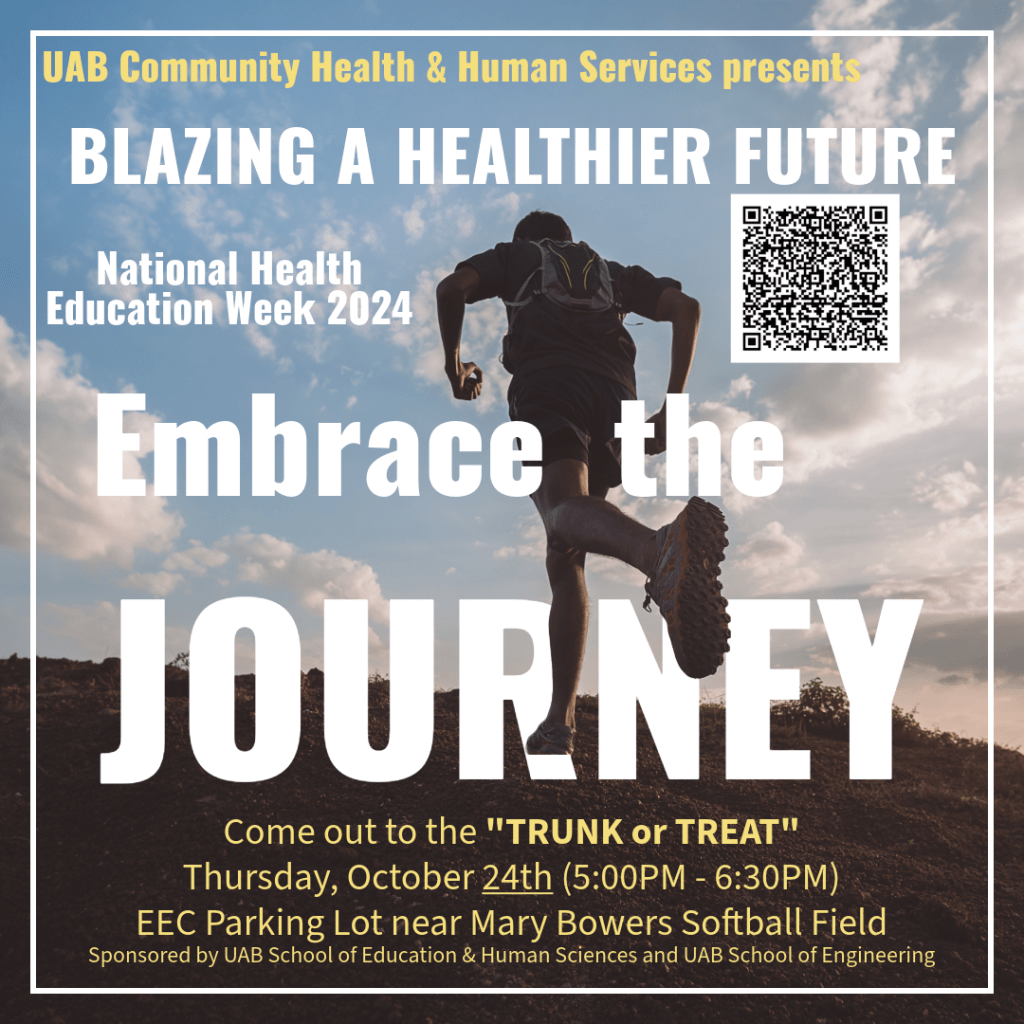
Please join the UAB Community Health & Human Services (CHHS) Program at our mental health and wellness outreach table on Tuesday, October 22nd (10am – 1pm). We will have a few items in support of overall student health and well-being, while also equipping ourselves with mental wellness techniques to exercise through the remainder of the semester. Check us out in the Education & Engineering Complex (EEC). See the flyer below.

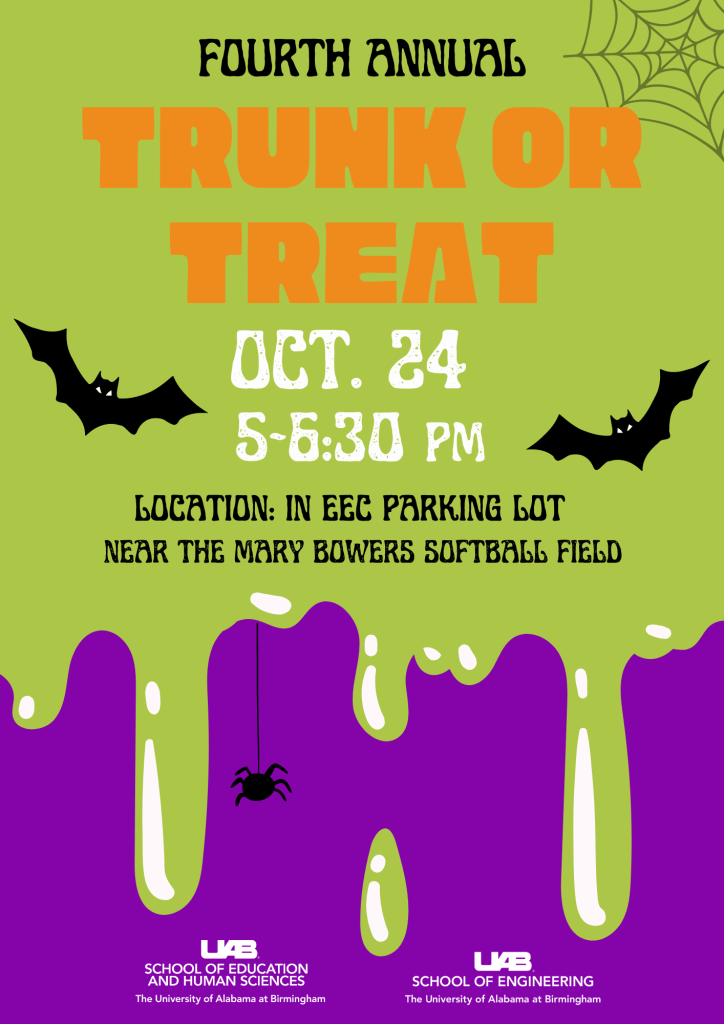
Please join the UAB Community Health & Human Services (CHHS) Program and have a good time ‘moving’ at the School of Education & Human Sciences “Trunk or Treat” event on Tuesday, October 24th (5:00pm – 6:30pm). The CHHS Program will provide the sounds that keep you ‘moving and grooving’ as you visit different trunks to get your treats. Come out and play corn hole, dance in streets, and get some candy. We will have a few items in support of overall student health and well-being. Check us out in the Education & Engineering Complex (EEC). See the flyer below.

Tips for Physical, Mental, & Emotional Well-Being

To learn more about National Health Education Week, please visit the Society for Public Health Education (SOPHE) website, here. To learn more about emotional wellness in the United States of America, please visit the Centers for Disease Control & Prevention (CDC) weblink, here. Regarding ones physical health, the CDC recommends the following, here.


Addressing substance misuse among young people: Supporting brighter futures

By Haleigh Horton | UAB Community Health & Human Services Program Student

Photo by cottonbro studio on Pexels.com

Substance use among teenagers and adults is a serious public health issue that affects an individual’s health as well as the health of their families and communities. In 2022, an estimated 48.7 million individuals twelve and older had a substance use disorder, including 29.5 million experiencing alcohol use disorder (AUD) and 27.2 million experiencing drug use disorder (DUD), according to the Substance Abuse & Mental Health Services Administration (SAMHSA). Teenagers and young adults may be particularly susceptible to the influence of drugs due to a variety of social, economic, and environmental factors (Morin, 2022). As a result of teenage and young adult substance abuse, it is important for society to promote healthy behaviors among youth, it is essential to implement preventive measures and interventions to combat the health and social issue.

According to the CDC (2022), young people may be at risk for substance use if experiencing risk factors like:

  • Family history of substance use
  • Favorable parental attitudes towards the behavior
  • Poor parental monitoring
  • Parental substance use
  • Family rejection of sexual orientation or gender identity
  • Association with delinquent or substance using peers
  • Lack of school connectedness
  • Low academic achievement
  • Childhood sexual abuse
  • Mental health issues

School-based preventive programs should be encouraged in our nation’s middle and high schools. These programs may promote positive peer relationships and effective decision-making, while educating them about the risks and consequences of substance abuse. Moreover, students can develop resilience and coping skills needed to navigate adolescence and resist substance abuse by incorporating social-emotional learning elements, such as empathy and self-awareness (ICF, 2022). It is also important for communities to provide support and resources for teenagers and their families by engaging local community organizations, religious institutions, and local leaders in an effort to create awareness about teenage drug use, as well as provide support and resources for those too (ICF, 2022). Counseling services, peer support groups, and recreational activities are also needed supports to address drug use among teenager and young adults (SAMHSA, 2023). Effective strategies to prevent drug use among young individuals is critical to ensuring the well-being of our communities.

We can help teenagers and young adults have a healthier future by implementing evidence-based prevention programs, creating supportive environments, and providing them with essential skills and resources. Advocacy and community involvement are essential to overcoming substance abuse challenges and fostering positive outcomes for future generations. So what do you think? Have you benefited from programming in schools? In college? Share here and on our Facebook page @Phame.US.Impact.

References:

Drug-free communities program successes | drug overdose | CDC injury center. (2023, October 23). https://www.cdc.gov/drugoverdose/drug-free-communities/program-success.html

HHS SAMSHA release 2022 national survey on drug use and health data. (2023, November 13). https://www.samhsa.gov/newsroom/press-announcements/20231113/hhs-samhsa-release-2022-nsduh-data

High risk substance use in youth | adolescent and school health | CDC. (2023, March 24). https://www.cdc.gov/healthyyouth/substance-use/index.htm

ICF (2022). Drug-Free Communities (DFC) Support Program National Cross-Site Evaluation: End-of-Year 2022 Report. Washington, DC: Office of National Drug Control Policy.

Morin, A. (2022, January 9). Is your teen using drugs? look for these warning signs. Verywell Family. https://www.verywellfamily.com/teen-drug-use-
warning-signs-2606192